 English
  Spanish
  French
  German
  Russian
  Japanese
  Korean
  Portuguese
 Are rising silicone raw material prices about to increase your adhesive, release coating or high-temperature coating costs? In early August 2026, Chinese silicone producers raised quoted levels after a steep July decline and expectations of coordinated output reductions. For tape coaters and formulators, the risk is not simply a higher DMC number. Delayed quotations, shorter price-validity periods and uneven cost transmission can disrupt margins and production planning. Buyers should now examine which formulations are truly exposed, which materials can be dual-sourced and how silicone resin quality will be protected during supplier changes.
The August 2026 rebound in Chinese silicone prices is a supply-side signal, not a uniform price formula for every downstream product. Buyers of MQ silicone resin and silicone pressure-sensitive adhesive should monitor actual transaction prices, supplier lead times, formulation dependence and qualified alternative sources before changing inventory plans.
Why Did Silicone Raw Material Prices Rebound in August 2026?
On August 3, a Shanghai Metals Market report said industry quotations as of August 2 were approximately RMB 12,500/mt for DMC, RMB 13,000/mt for 107 silicone rubber, RMB 13,500/mt for raw silicone rubber and RMB 14,000/mt for silicone oil. It linked the rebound mainly to expectations of a 50% coordinated production reduction and noted a possible additional RMB 500/mt increase later in August.
| Material | Reported August 2 Level | Typical Procurement Relevance |
|---|---|---|
| DMC | RMB 12,500/mt | Broad upstream market indicator |
| 107 silicone rubber | RMB 13,000/mt | Sealants, compounds and selected adhesive systems |
| Raw silicone rubber | RMB 13,500/mt | Silicone rubber and compounded materials |
| Silicone oil | RMB 14,000/mt | Release systems, additives and formulated products |
These were guidance levels, not guaranteed transaction prices. Business Society placed its DMC benchmark at RMB 13,000/mt on August 5. Buyers should watch actual production cuts, peak-season orders and producer inventories.
Does a Higher DMC Price Automatically Raise Silicone Resin Prices?
No. DMC is an important upstream indicator, but it is not the direct feedstock for every silicone resin. MQ silicone resin commonly depends on silicate sources and trimethylsilyl raw materials, while methyl phenyl silicone resin requires phenyl-functional intermediates. Energy, solvents, catalysts, logistics and operating rates also affect the final cost.
A sustained rise across DMC, silicone oil and silicone rubber can still tighten the wider organosilicon chain. Producers may adjust resin or PSA quotations according to replacement cost, inventory and orders. Buyers should request a grade-specific explanation instead of applying the DMC percentage change to every resin.
Which Silicone Resin Applications Face the Greatest Sourcing Pressure?
MQ Silicone Resin for Pressure-Sensitive Adhesives
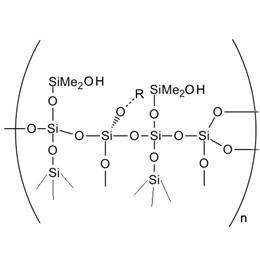
MQ silicone resin for PSA provides tack and helps balance peel adhesion, cohesion and temperature performance with a compatible silicone polymer. It is important in adhesives for PET and PI tapes, electrical insulation, masking and protective films. Cost exposure depends on resin-to-polymer ratio, coating weight, solvent content and curing route.
Replacing a resin only by M/Q ratio or solids content can change compatibility, clarity, viscosity and cured adhesion. A lower quotation therefore does not guarantee a lower coated cost per square metre.
Platinum-Cured PSA and Electronic Protective Films
Platinum-cured silicone PSA may combine silicone polymer, resin, crosslinker, anchorage additive and platinum catalyst. XJY-302 grades cover low-, medium- and higher-adhesion protective films; particular grades target low migration or limited thermal adhesion rise. Buyers should compare full-system performance, not only price per kilogram.
High-Temperature Silicone Resin Coatings
Methyl phenyl silicone resins are used in heat-resistant coatings for industrial equipment, electrical components and other metal substrates. Here, resin quality affects film hardness, thermal stability, weather resistance and formulation consistency. Pigment selection and curing conditions also matter, so an untested raw-material change can cost more than the apparent purchase saving.
What Does Dow’s Specialty Silicone Expansion Tell Buyers?
Short-term prices are recovering while investment is moving toward higher-value materials. On June 23, 2026, Dow announced approximately US$100 million of specialty silicone investments through 2027 across the United States, China and Japan. Projects cover liquid silicone rubber, engineered materials for advanced electronics and thermal-management laboratories.
The message is clear: commodity capacity and specialty capability are separating. Supplier evaluation increasingly includes batch consistency, application support, supply resilience and qualification speed – not only spot price.
How Should Buyers Respond to the 2026 Silicone Price Change?
- Separate market indicators from product quotations. Track DMC, but request current, grade-specific resin or PSA pricing and validity periods.
- Map formulation exposure. Identify resin, polymer, silicone oil, crosslinker and catalyst usage by product line.
- Protect qualified safety stock. Base inventory on lead time and confirmed orders rather than speculative price expectations.
- Qualify a second source before disruption. Compare samples at laboratory and pilot-coating scale while current production remains stable.
- Measure total coated cost. Include dilution, coating weight, curing energy, yield, residue risk and rejected rolls.
Which XJY Silicone Resin and PSA Products Can Buyers Evaluate?
| XJY Product Family | Product Positioning | Typical Evaluation Direction |
|---|---|---|
| XJY-8205 Series | Methyl MQ silicone resin | Silicone PSA tackification, release, defoamer and waterproof formulations |
| XJY-301 Series | Peroxide-cured silicone PSA | High-temperature industrial tape systems |
| XJY-302 Series | Platinum-cured silicone PSA | PET protective films and controlled-adhesion applications |
| XJY-8010A / 8010B / 8250A | Flake methyl phenyl silicone resin | Heat-resistant and weather-resistant coating development |
Selection should begin with the existing formulation, substrate, coating thickness, cure system and target peel or thermal performance. XJYSilicones can then recommend an initial grade and provide samples for side-by-side testing.
Why Source Silicone Resin from XJYSilicones?
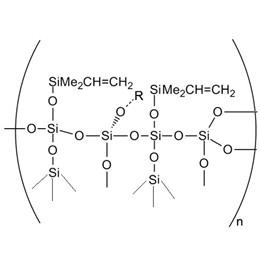
XJYSilicones is a Chinese manufacturer of silicone resins, silicone fluids, silicone PSA and customized polysiloxanes. Its four continuous MQ resin lines use DCS process control, with dedicated lines for personal-care, vinyl MQ, industrial MQ and hydrogen-functional MQ materials. This helps control cross-contamination and batch variation.
For industrial buyers, XJYSilicones provides samples, TDS, COA and batch documentation, together with application support for resin dissolution, PSA matching, coating trials and alternative-grade evaluation. The objective is not merely to quote a lower kilogram price, but to help maintain stable processing and finished-product performance when the market changes.
Contact XJYSilicones to discuss your current MQ silicone resin, silicone PSA or high-temperature silicone resin requirements and request a grade-specific quotation and sample plan.