
 English
  Spanish
  French
  German
  Russian
  Japanese
  Korean
  Portuguese
 XJY Silicone as one of the most experienced MQ and VMQ silicone resins suppliers in China, offers the best MQ resin and VMQ silicone solutions at affordable prices. We offer high-quality and stable MQ and VMQ silicone resins in a variety of index specifications to meet the individual needs of each customer.
Methyl MQ Silicone Resin
Home
Methyl MQ Silicone Resin
Contact Us
For more information, please contact us.
Get Free Sample
Why choose MQ RESIN?
Choosing MQ resin means combining performance, stability and formulation freedom in one material. MQ silicone resin offers high heat and UV resistance, excellent film-forming, and very low surface energy, so it improves adhesion, cohesion and durability on many substrates. MQ resin is also easy to formulate with silicones, oils and solvents, allowing low dosage with strong effects—an efficient way to upgrade existing products or design new high-performance systems
Contact Us


For Cosmetics
Silicone ingredients are indispensable in cosmetics due to their superior film-forming properties and abrasion resistance, exceptional sweat-proof and water-resistant performance, dry, smooth, and lightweight texture, while significantly reducing greasiness and enhancing smudge-proof and transfer-resistant capabilities, skin-brightening effects, and soft-focus properties.
Recommended Products:
XJY Silicones offers a diverse range of silicone ingredients to meet specific formulation needs:
- Foundation, Cushion: XJY-8203
- Long-wear Lipstick, Lip Lacquer: XJY-8208
- Lip & Cheek Tint: XJY-804M/MA
- Eyebrow Pencil, Mascara: XJY-82012
Defoamer
Methyl MQ Silicone Resin in Defoamers and Advantages in Specific Scenarios
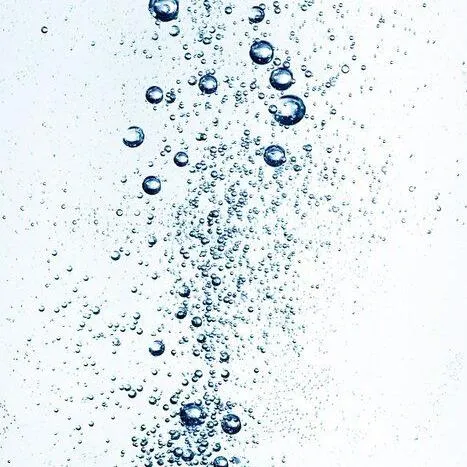
MQ silicone resin plays a key synergistic role in defoamers, with the following core advantages: It can enhance the long-lasting foam suppression and rapid defoaming properties of defoamers. Through intercalation and crosslinking with components such as fumed silica/silicone oil, it simultaneously improves the continuous foam suppression and rapid bubble breaking capabilities, ensuring stable and efficient defoaming effects; it has excellent temperature resistance and shear resistance, maintaining effective defoaming activity even under extreme conditions; it can reduce the risk of foam rebound and ensure long-term stable operation of the system; it takes effect at low addition levels, improving the economic efficiency of defoamer formulations; it has excellent acid and alkali resistance, suitable for various industrial environments such as water treatment and papermaking.
- Excellent Shear Resistance and Temperature Resistance: Maintaining Defoaming Efficiency Under Harsh Working Conditions
- Shear Resistance: It can resist defoamer degradation and demulsification failure caused by high shear force, improving system stability. In food processing, the high-speed mixing process of dairy product or juice homogenization generates strong shear force. Unlike traditional defoamers that may fail under such conditions, defoamers containing MQ silicone resin can resist shear-induced degradation, maintain defoaming ability, and reduce the demulsification failure rate of the defoamer system caused by shear force; in metal cutting and machine tool processing scenarios, shear force can also lead to defoamer failure, and MQ silicone resin enhances the stability of the defoamer system.
- Temperature Resistance: It does not affect the defoaming function in high-temperature environments. In food processing, such as canning, soybean milk boiling, and sugar refining boiling stages, it can achieve stable defoaming; in the papermaking industry, during the high-temperature pulp cooking process, it can keep the defoamer stable, preventing excessive foam from affecting pulp quality and production efficiency.
- Reducing Foam Rebound Risk: Relying on the stabilizing effect of methyl MQ silicone resin, it continuously inhibits foam generation, reduces foam rebound, and ensures long-term stable operation of the defoamed system.
- High Efficiency and Economy: Significant defoaming effect can be achieved at low addition levels, which helps improve the economic efficiency of defoamer formulations.
- Excellent Acid and Alkali Resistance: Suitable for pH-fluctuating scenarios such as water treatment and papermaking. In water treatment (sewage treatment scenarios), industrial sewage usually exhibits strong acidity or alkalinity depending on its source (e.g., acidic wastewater from metal electroplating, alkaline wastewater from textile dyeing). MQ silicone resin defoamers can still function in these extreme pH environments, effectively eliminating foam generated during aeration and mixing processes, and avoiding foam overflow that interferes with treatment operations. In papermaking scenarios, the pH value of papermaking pulp usually fluctuates (acid pulping or alkaline bleaching processes). Acid and alkali resistant MQ silicone resin ensures the continuous operation of the defoamer, preventing foam from interfering with pulp screening, washing and papermaking on the machine.
- Rapid Defoaming: While ensuring long-term foam control, the resin also enables the defoamer to quickly decompose existing foam in the system, which is crucial for situations requiring immediate foam removal, such as emergency foam control in food fermentation tanks or papermaking white water systems.
Recommended Products:
For long-lasting foam-suppressing:
- Liquid Compound : 6311/6318/6363; Powder : 6011/6018.
For rapid defoaming:
- Liquid Compound : 6310; for powder:6010/6012.
Mechanism of Action of Methyl MQ Silicone Resin in Silicone Release Agents for Polyurethane (PU)
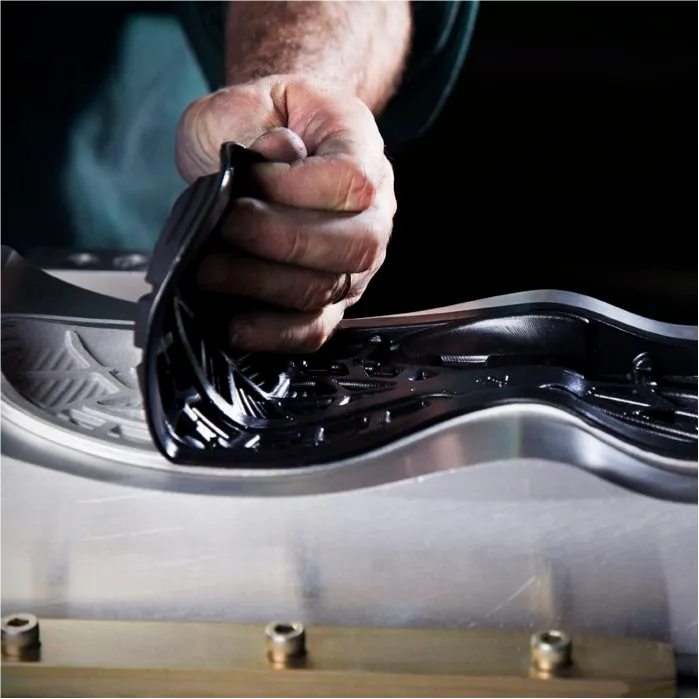
Methyl MQ silicone resin serves as the core functional component of PU release agents. Its unique cage – type molecular structure (M unit: monofunctional group; Q unit: tetrafunctional group) and surface properties determine its key role in the PU demolding system. It ultimately enables efficient and damage – free separation of PU products from molds, while significantly enhancing the durability of the release agent and the quality of the products.
- Core Mechanism of Action
Forming a Film with Ultra – low Surface Energy to Construct a Lubricating Isolation Layer
The molecular surface of methyl MQ silicone resin is rich in methyl groups, with a surface energy as low as 20–22 mN/m, which is much lower than that of PU (about 40 mN/m) and metal/glass fiber reinforced plastic molds (about 30–50 mN/m).
After the release agent is applied, methyl MQ silicone resin will be directionally adsorbed and spread to form a dense and uniform film, creating a physical isolation barrier between the PU melt and the mold surface. This greatly reduces the interfacial adhesion between the two, fundamentally reducing the mold sticking phenomenon.
Enhancing Cohesive Strength and Heat Resistance of the Film to Improve Repeated Demolding Times and Durability
The PU curing process is often accompanied by heat release (the reaction temperature can reach 80–120℃). Ordinary silicone oil – based release agents are prone to migration and loss when heated, leading to demolding failure or residual adhesive.
The cage – type structure of methyl MQ silicone resin has a high cross – linking density. When compounded with silicone oil, it can significantly enhance the cohesive strength and thermal stability of the release agent film. The film will not decompose, migrate, or be dissolved and eroded by the PU melt under the thermal effect of PU curing.
This characteristic allows the release agent applied in a single coating to withstand multiple cycles of PU pouring, curing, and demolding, greatly increasing the number of repeated demolding operations, reducing the operational cost of frequent re – coating of the release agent, and improving production efficiency.
Optimizing Film Flatness to Improve Surface Gloss of PU Products
The cage – type molecular structure of methyl MQ silicone resin can fill the micro – gaps in the silicone oil film, forming a smooth and dense continuous film.
During the PU curing and molding process, the smooth film on the mold surface will be reversely replicated onto the surface of the PU product, reducing pitting, defects, and mold – sticking marks on the product surface, and significantly improving the surface gloss and appearance consistency of PU products. It is especially suitable for PU elastomers, foam products, and other items with high appearance requirements.
Adapting to the Curing Characteristics of the PU System Without Interfering with the Reaction Process
The curing of PU relies on the addition polymerization reaction between isocyanate and polyol, which is sensitive to impurities in the system (such as substances containing active hydrogen and heavy metal ions).
Methyl MQ silicone resin has stable chemical properties, contains no active hydrogen groups, and will not undergo side reactions with PU curing agents. Meanwhile, the siloxane bonds in its structure are highly inert, which do not interfere with the cross – linking and curing process of PU, ensuring that the mechanical properties (hardness, tensile strength) of PU products are not affected. - Specific Application Points of Methyl MQ Silicone Resin in PU Release Agents
Compound System Design
It is usually compounded with dimethyl silicone oil and hydroxyl silicone oil: silicone oil provides basic lubricity, while methyl MQ silicone resin is responsible for film formation, reinforcement, and gloss improvement. The two components work synergistically to precisely adjust the repeated demolding times, durability, and product gloss of the release agent.
Viscosity and Coating Method
For different PU products (such as flexible foam, rigid foam, and elastomers), it is necessary to adjust the addition amount of methyl MQ silicone resin (generally 5%–20%) and the system viscosity. Spraying, brushing, or dipping can be adopted to ensure uniform coverage of the mold surface.
Compatibility with Mold Substrates
For metal molds, a small amount of silane coupling agent can be added to improve the adhesion between the methyl MQ silicone resin film and the mold, reducing film peeling. For glass fiber reinforced plastic molds, low – migration methyl MQ silicone resin should be selected to avoid contamination of the mold surface.
- Ⅰ.Liquid Compounds
- Stable-quality & Easy-to-use : RAN-03 / RATN-09
- Well-rounded performance: RAN-03
- Reduced mold fouling; enhanced multiple-release performance:RATN-09
- Powder Pure resin
-
- Resin Powders for Convenient Storage & Transportation: RA-03 / 09T / 03T
- Well-rounded performance:RA-03
- Enhanced multiple-release performance:RA-09T
-
Medical
Silicone materials are widely used in medical applications for their film-formingability and water/bacteria resistance in wound care sprays, flexibility and processingprecision in dental silicone materials, controlled drug release and skin conformity insilicone gel dressings, reliable adhesion that keeps stable contact on moving bodyparts in wearable medical adhesives, and low-viscosity silicone oils for effectivecleaning of silicone adhesive residues.
Recommended Products:
Wound Care Spray: 9660 / 9670 / 9680
Dental Silicone Materials: 9860/9866
silicone Gel Dressings: 9706 / 9708/9006/9008
Wearable Medical Silicone Adhesives: 9502 / 9505
Low-viscosity silicone oils: 1010/ 1012/ 1016

Silicone Pressure Sensitive Adhesive (PSA)
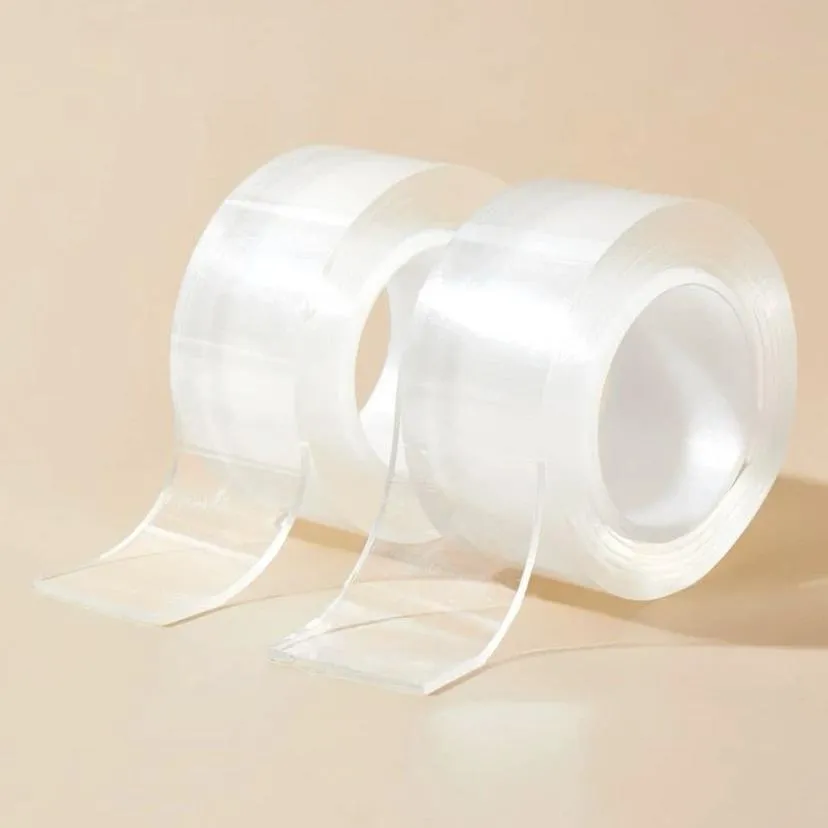
MQ silicone resin primarily serves as a tackifier and reinforcing agent in PSA. The Si-OH in MQ resin can occur condensation reactions with hydrogen-containing silicone under the action of a catalyst, thereby producing PSA. MQ resin used in PSA to endow them with excellent cohesive strength, bonding capabilities (including initial adhesion, high-temperature adhesion retention, and low-surface-energy adhesion), temperatures resistance (-60°C to 280°C), long-term stability, and outstanding resistance to chemical corrosion, UV radiation, and weathering. The adhesive features a fast curing speed and leaves no residue upon tape removal.
Additive type PSA: XJY-8205-05
Condensation type PSA: XJY-8205-01 02 03
For industrial
Methyl silicone resin is commonly used as a multifunctional structural additive in industrial systems. As a crosslinking agent, it can be incorporated into silicone rubber and resin systems to enhance crosslink density and thermal stability by participating in the formation of the siloxane network. For reinforcement and filling, methyl silicone resin can be introduced into RTV rubber, HTV rubber, and addition-cure liquid silicone rubber to improve mechanical properties and dimensional stability without significantly compromising flexibility. As a tackifier, it is extensively applied in sealants and silicone coatings to improve initial tack, cohesive strength, and adhesion to substrates. Additionally, methyl silicone resin frequently serves as an intermediate for modified MQ silicone resins, providing a stable resin backbone for subsequent functionalization or structural modification.
Recommended Products:
- Modified MQ Resin Intermediates
- Serves as a stable resin backbone for functionalized MQ systems.
- Enables subsequent hydrogenation, vinyl modification, or other structural tuning.
XJY-8207 (S/M) Hydrogen MQ Resin
- Tackifier in Sealants and PSA (Pressure-Sensitive Adhesive) Systems
- Enhances the initial adhesion, cohesive strength, and adhesion, while also maintaining moderate flexibility.

MQ VS Polyurethane/Epoxy
| Aspect | MQ Silicone Resin | Polyurethane / Epoxy |
| Heat resistance | Excellent, stable >200 °C | Good–very good, may yellow or embrittle |
| Weathering / UV | Outstanding, minimal chalking | Often needs UV stabilizers |
| Film character | Thin, flexible, high gloss, low surface energy | Thicker, harder, higher surface energy |
| Adhesion role | Boosts adhesion / cohesion at low dosage | Main structural binder, higher loading |
| Typical use | Additive for durability, release, long-wear films | Base resin for structural and protective coats |
Precautions of choosing MQ resin
Silicone MQ Resin Manufacturer in China
As one of the most experienced MQ and VMQ silicone resins suppliers in China, XJY Silicones offers the best MQ resin and VMQ silicone solutions at affordable prices. We offer high-quality and stable MQ and VMQ silicone resins in a variety of index specifications to meet the individual needs of each customer.
We produce abundant silicone resins, including Methyl MQ silicone resin, VMQ silicone (Methyl Vinyl silicone resin), hydrogen-containing MQ silicone resin, MQ silicone resin in toluene solvent, VMQ silicone resin in Vinyl Polysimethylsiloxane silicone oil solvent, Polymethylsilsesquioxane, Trimethylsilicate, etc. These silicone resins are suitable for many applications such as silicone defoamers, silicone release agents, liquid silicone rubber (LSR), pressure sensitive adhesives, tackifying resins, personal care and more.
Our R&D engineers are industry experts, please contact us for any suggestions. We will always provide high-quality silicone resins at affordable prices.
What are MQ silicone resin and VMQ silicone resin?
MQ silicone resin
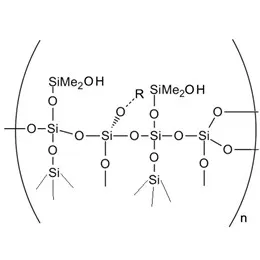
MQ silicone resin is a silicone resin with a unique structure. It is a three-dimensional spherical silicone resin formed by the co-hydrolytic condensation of a silicone compound containing a tetrafunctional siloxane bond (SiO4/2, Q) and a silicon compound having a monofunctional siloxane bond (R3SiO1/2,M). The molar mass of silicone MQ resin generally ranges from 1000 to 8000 g/mol, with a wide range of glass transition temperatures (T g) and a state distribution ranging from viscous fluids to solid powders.
The MQ silicone resin is generally considered a dense sphere with a bilayer structure. The core is a Si-O chain-linked caged SiO 2 with a high density and a degree of polymerization of 15 to 50, and the shell is a low-density R3SiO1/2 layer.
VMQ silicone resin
VMQ silicone resin, also named Methyl Vinyl silicone resin, is a unique silicone resin containing a reactive group–vinyl group, introduced into the silicon atom of methyl silicone resin, and its molecules are composed of a three-dimensional (non-linear) structure of silicone polymer material with Si-O bond as the siloxane backbone.
VMQ resin benefits from its long-chain spherical molecular structure, and thus has unique properties: good mechanical properties, high and low-temperature resistance, electrical insulation, moisture resistance, and water resistance.
Benefit from the following manufacturing advantages:
1. Pre-production samples for all orders before production starts
2 Free packaging services
3. Precision manufacturing on branded CNC equipment
4. Experienced engineers to monitor the entire production process
5. Stable after-sales service
6. 24-hour warehousing service and logistics support
7. Wholesale and retail experience
8. Quality control, including raw material incoming inspection, process intermediate product inspection, finished product factory full analysis inspection
Our MQ resin and VMQ silicone resin can be used in different product areas
The raw material for synthesizing MQ silicone resins is mainly sodium silicate. Modification of MQ silicone resin is also extremely easy, facilitating the preparation of modified resins for special applications and the development of functional MQ silicone resin. As one of the abundant silicone resins represent, siloxane MQ resins have great potential for many applications and a wide range of uses because of their mechanical properties.


Silicone Pipe Silicone Dental Impression Medical Silicone Gel Silicone Baby Pacifiers



Resin Cup Transparent LSR LED Encapsulation Silicone Polishes


Coating Silicone Defoamer Silicone Release Agent VMQ Silicone



Cosmetic Skincare Silicone PSA SPSA
If you want to know which MQ silicone resin is suitable for your product, please contact us.
How we manufacture silicone resins:
 |
Incoming material: Warehouse inspection, test of raw materials storage and shipment, storage planning and temporary collection of raw materials and accessories |
 |
IQC: Test of raw materials appearance, content%, pH, impurity, viscosity, etc. Inspection of raw materials stored in the warehouse, inspection on storage conditions and use status of temporary material storage systems. |
 |
Product warehousing: The storage conditions of raw materials, auxiliary additives and packaging materials are controlled at appropriate degrees Celsius with relative moderate humidity. |
 |
Production preparation: Silicone material preparation, picking up and issuing. Check the work instruction, observe every production process to find any errors that may cause deviations or failures. |
 |
Start production: According to the start-up standard process, production process monitoring by R&D engineers to ensure the production quality standards. Quality control is also done at every step of manufacturing based on a standard workshop procedure. |
 |
Data testing and recording of raw materials, semi-production products, and finished products: Samples are prepared from the final product for testing, and the product qualification rate and COA are confirmed according to the sample data indicators. Typical quality indicators of final MQ silicone resin product testing include appearance, contend %, molecular weight, viscosity, whiteness, loss on drying %, etc. |
 |
Qualified product storage and packaging, finished goods warehousing: The final product is QC inspected before packaging into cartons or drums. The approved products are prepared and then stored in a clean warehouse until they’re ready to apportionment as per the customer’s request. |
 |
Delivery We understand the importance of stable warehousing and delivery support. Our 24-hour monitored warehousing system ensures the security of your orders. We can handle any inventory issues, including high volume orders and direct sales orders. |
Products Question
What is the MOQ of MQ resin and VMQ silicone?
For our existing regular in-stock products, the MOQ starts from 1 piece.
If you would like to customize a product with a specific specification, please contact us to determine the MOQ.
What is the capacity of your MQ silicone resin?
MQ resin powder line Capacity: 200 tons/m
VMQ silicone resin powder line Capacity: 100 tons/m
Do you offer a delivery service for silicone resins?
Of course, we are happy to provide our customers with a substitute shipping service.
We also offer a courier service with different prices and delivery times depending on your needs.
Your order will be delivered quickly and safely. Our professional team will also help with any urgent.
What is the sample fee for MQ resin and VMQ silicone resin?
Samples up to 1KG are free of charge, and shipping costs are paid on delivery.
For a large amount of sample cost, please contact us to discuss.
What kind of packaging is used for MQ resin and VMQ silicone resin?
Resin powder is usually packed in 25KG cardboard drums.
The liquid is packed in 200KG iron drums.
What is the lead time for production?
For our existing regular stock products, we usually need 7-15 days, the lead time may be longer for higher quantities, depending on the actual delivery date of the factory.
For custom products, please contact us to determine the exact lead time.
Do you provide warehousing services for my product orders?
We offer a professional 24-hour monitored warehousing service for every customer.
What are your payment terms?
For samples, 100% T/T in advance.
For orders: 50% TT in advance, 50% balance before shipment.
For large long-term orders, please contact us to discuss payment terms.
How long is the service life of your silicone resin?
We use high-standard raw materials to produce silicone MQ resin and VMQ silicone resin, which usually last for 1 year in unopened conditions under indoor ventilation and dry conditions.
I would like to know more?
Request For Quote
Contact to our expert get the best solution for your requirements.