 English
  Spanish
  French
  German
  Russian
  Japanese
  Korean
  Portuguese
 However, “can be the main binder” does not mean that it will work as a one-material coating in every application. The final choice depends on the substrate, service-temperature profile, film-build target, adhesion and flexibility requirements, pigments and fillers, solvent system, application method, and curing process. Some formulations are better served by using XJY-8010A with polyester, epoxy, or another silicone resin. In every case, the complete coating must be validated before scale-up.
What Does “Main Binder” Mean in a High-Temperature Coating?
The binder is the resin phase that forms and holds the coating film together. It anchors pigments and fillers, contributes to adhesion and mechanical properties, and strongly influences what happens when the coating is heated.
Calling a silicone resin the main binder means that it supplies the principal film-forming resin contribution. It does not mean that the formulation contains no pigments, fillers, additives, catalysts, or other necessary ingredients. It also does not prove that the resin should be the only binder component.
This distinction matters because a resin can perform two different jobs:
- As the main binder, it provides the coating’s primary resin framework.
- As a modifying resin, it is blended with another binder to adjust properties such as heat resistance, hardness, weatherability, adhesion, flexibility, or processability.
For readers who need a broader introduction to the material class, see What Is Silicone Coating? The question here is narrower: how should a formulator decide whether a solid flake resin belongs at the center of the binder system?
When Can Flake Silicone Resin Be the Main Binder?
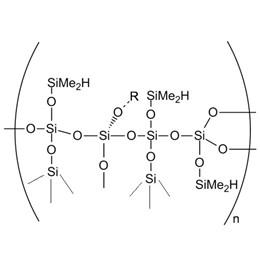
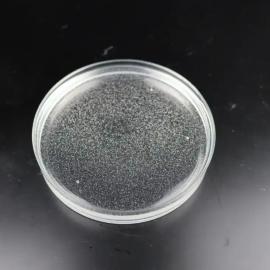
A main-binder route is worth evaluating when the project places high priority on thermal stability and a hard, heat-resistant film. XJY-8010A is a hydroxyl-functional flake methyl phenyl silicone resin. XJY Silicones identifies it for high-temperature powder coatings and solvent-based high-temperature coatings, including use as a binding resin.
A main-binder evaluation is more appropriate when:
- The coating is intended for elevated-temperature service and the binder must remain functional through the defined thermal exposure.
- Film hardness and thermal stability are major formulation targets.
- The production process can handle a solid flake resin, either through powder-coating processing or controlled dissolution for a solvent-based system.
- The selected pigments, fillers, additives, substrate, and curing schedule can be validated with the resin.
- The required balance of adhesion, flexibility, impact resistance, appearance, and application behavior can be achieved in the complete formulation.
The word evaluating is important. A product description establishes a reasonable starting point; it does not establish the performance of a customer’s complete coating. Target temperature, exposure time, heating and cooling cycles, atmosphere, substrate preparation, and film thickness can all change the result.
When Is a Modified-Resin Approach More Practical?
Using XJY-8010A as a modifying resin may be more practical when a formulator wants to retain important characteristics of an existing organic binder while improving its performance under heat. The product can be blended with polyester, epoxy, and other silicone resins, subject to compatibility and full-formulation testing.
| Formulation route | Best reason to evaluate it | Questions that must be answered |
|---|---|---|
| XJY-8010A as the main binder | Thermal stability and hardness are central targets | Does the complete film meet adhesion, flexibility, appearance, cure, and durability requirements? |
| XJY-8010A with polyester or epoxy | An established organic-resin system needs a different property balance | Are the resins compatible, and how does the blend affect phase stability, cure, and heat performance? |
| XJY-8010A with another silicone resin | Processing or film properties require a broader silicone-resin balance | Does the combination remain homogeneous and deliver the required application and service properties? |
No route is universally superior. For example, increasing the silicone-resin contribution may support high-temperature objectives, but the best resin balance still depends on the mechanical and application requirements of the coating. A screening matrix is more reliable than selecting a binder ratio from a generic formula.
For a wider view of coating-grade silicone options, visit the XJY Silicones coating materials page and the methyl phenyl silicone resin category.
How Should XJY-8010A Be Evaluated for a Solvent-Based Coating?
In a solvent-based system, the first practical question is often whether the flake resin can be dissolved reproducibly in the available reactor and remain stable in the intended formulation. The current XJY-8010A product information lists aromatic hydrocarbons, esters, and ketones as applicable solvent families.
That list is a starting point—not a universal solvent recipe. Solvent choice must also consider the other binders, additives, pigments, application method, drying profile, local regulations, and plant safety requirements. A solvent that dissolves the flake resin by itself may still be unsuitable for the final coating.
1. Confirm solvent and formulation compatibility first
Begin with a documented compatibility screen. Check the selected solvent or solvent blend against the complete resin package and the intended downstream formulation. Review the current SDS and internal EHS requirements before setting any processing conditions.
2. Define safe reactor conditions through plant procedures
Temperature limits, ventilation, explosion protection, grounding, equipment suitability, and operating controls must follow the SDS, solvent hazards, local rules, and the plant’s approved EHS procedures. A general article should not substitute for a site-specific process review.
3. Add the flake resin gradually under controlled mixing
Staged addition helps the operator observe wetting and dissolution behavior without assuming that a fixed addition rate or sequence will work for every vessel. The appropriate agitation, temperature, batch size, and addition profile should be established through laboratory and pilot work with the actual equipment.
4. Use measurable dissolution endpoints
Do not judge the batch only by elapsed time. Check for:
- Undissolved particles or sediment
- Clarity, haze, or unexpected cloudiness
- Viscosity consistency
- Measured solids content
- Uniformity across representative samples
- Short-term and extended storage stability
These observations help distinguish a fully prepared resin solution from a batch that merely appears mixed at the surface.
5. Recheck the solution in the complete coating
Once pigments, fillers, other resins, and additives are introduced, compatibility can change. Reassess viscosity, separation, settling, application behavior, and storage stability in the actual coating—not only in the neat resin solution.
What Should a Small-Scale Validation Plan Include?
Before committing a reactor batch, use enough sample to reproduce the intended preparation and coating tests. The exact sample mass should be based on the planned test matrix, expected process losses, application area, and the number of control and repeat specimens.
A useful development plan compares at least the main-binder route with any relevant blend route. Keep the substrate preparation, pigment and filler package, film thickness, application method, and thermal exposure consistent so that the binder choice is the principal variable.
| Validation stage | Recommended observations |
|---|---|
| Resin dissolution | Undissolved particles, clarity or haze, viscosity, solids content, uniformity, and storage stability |
| Formulation stability | Separation, sedimentation, viscosity drift, and compatibility after all ingredients are added |
| Application | Wetting, leveling, film build, appearance, and application consistency |
| Initial film properties | Cure response, hardness, adhesion, flexibility or impact performance where relevant, and solvent resistance |
| Thermal exposure | Cracking, blistering, discoloration, softening, loss of adhesion, and property retention after the intended heat cycle |
| End-use durability | Corrosion, weathering, humidity, or chemical-resistance tests required by the actual service environment |
Use appropriate controls. These may include the existing production binder, an XJY-8010A blend, and an XJY-8010A main-binder formulation. Controls make it easier to see whether a change is genuinely helpful and where a tradeoff has occurred.
How Should the Cure Schedule Be Used?
The XJY-8010A product page lists a heat-cure range of 180–300°C and gives 220°C for 30 minutes as a recommended condition. Treat both as supplier starting guidance for formulation development—not as a guaranteed production setting.
The correct cure window must be verified for the actual substrate, dry-film thickness, pigment and filler package, additives, oven loading, and measured part-temperature profile. Oven setpoint and actual substrate temperature are not necessarily the same. The coating must also be evaluated after cure and after the intended thermal exposure.
This validation-first approach is especially important in high-temperature coatings, where initial hardness or appearance alone cannot predict performance after repeated heating and cooling. For more general background on the material class, see Why Silicone High-Temperature Coatings Are Preferred.
A Practical Decision Checklist
Before choosing XJY-8010A as the main binder, answer these questions:
- What continuous, peak, and cyclic thermal exposures must the finished coating withstand?
- Which substrate, pretreatment, application method, and dry-film thickness will be used?
- Are hardness, adhesion, flexibility, impact resistance, corrosion resistance, weatherability, or appearance the most important performance targets?
- Will the process use the resin as a powder, or will it be dissolved for a solvent-based coating?
- Is the chosen solvent system compatible with every resin and additive in the formulation?
- Can the plant safely control the dissolution process under its approved EHS procedures?
- What control formulations and test methods will be used to compare the main-binder and modified-resin routes?
- Has the cure schedule been verified from the actual part-temperature profile and final film performance?
If several answers are still unknown, the next step is a controlled sample evaluation rather than a full production batch.
Frequently Asked Questions
Can XJY-8010A be used alone as the resin in a high-temperature coating?
It can be evaluated as the main binder, but “main binder” should not be interpreted as a universal one-component formulation. The complete system—including pigments, fillers, additives, substrate, application process, and cure—must be designed and tested. A resin blend may be more suitable when adhesion, flexibility, processing, or another property requires a different balance.
Which solvents can be considered for dissolving XJY-8010A?
The current product information lists aromatic hydrocarbons, esters, and ketones as applicable solvent families. Select and validate the actual solvent or blend for the complete formulation, and follow the SDS and site-specific EHS rules.
How can a formulator confirm that the flake resin is dissolved?
Use measurable endpoints such as the absence of undissolved particles, consistent clarity or haze, stable viscosity, verified solids content, representative sample uniformity, and storage stability. Do not rely on mixing time alone.
Is 220°C for 30 minutes always the correct cure condition?
No. It is a supplier-recommended starting condition. The production cure must be validated for the substrate, film thickness, formulation, oven profile, and required coating performance.
Request an XJY-8010A Sample for Formulation Screening
Choosing between a main-binder and modified-resin route is best done with a defined comparison plan. When contacting XJY Silicones, include your target service-temperature profile, substrate, coating type, solvent restrictions, cure equipment, required properties, and planned sample quantity. If your evaluation requires 500 g or more, state the amount needed and the tests it will support so the sample request can be reviewed against the project scope.
Contact XJY Silicones to discuss XJY-8010A, request a sample, and confirm the current technical documents before beginning laboratory or reactor trials.