
 English
  Spanish
  French
  German
  Russian
  Japanese
  Korean
  Portuguese
 In the fields of electronic encapsulation, medical consumables, and aerospace, Room Temperature Vulcanized (RTV) silicone rubber is highly favored for its exceptional weatherability, electrical insulation, and processing convenience. However, unreinforced pure RTV silicone rubber suffers from extremely low mechanical strength (tensile strength is typically less than 0.4 MPa).
What is MQ silicone resin, and is VMQ the same as silicone? While standard elastomers consist of linear chains, MQ silicone resin is a core component characterized by its compact spherical double-layer structure, which allows it to act as both a structural backbone and a functional modifier. What is silicone resin used for? High-performance silicone resins, including vinyl MQ silicone resin and methyl mq silicone resin, are widely utilized in liquid silicone rubber, building sealant, silicone pressure-sensitive adhesives, and high-temperature resistance coatings to elevate mechanical properties and durability.
The traditional approach involves adding fumed silica as a reinforcing filler. While this improves strength, it often leads to a drastic increase in system viscosity, processing difficulties, and a severe sacrifice of the material’s optical clarity. Is there a solution that can simultaneously achieve a massive increase in strength, maintain extremely high transparency, and generate no harmful byproducts? The latest research points to a revolutionary direction: using Methoxyl-Capped MQ Silicone Resin (MMQ) as a “self-reinforced cross-linker.”
I. Shifting from “Physical Fillers” to “Molecular Self-Reinforcement”
Traditional reinforcement relies on physical blending, whereas the newly proposed Methoxyl-Capped MQ Silicone Resin (MMQ) participates deeply in the curing process through chemical bonding.
What is MQ material? MQ silicone resin consists of both monofunctional (M) and tetrafunctional (Q) siloxane units, which contribute to its unique properties and applications in various materials. The production process of such silicone resins often employs the sodium silicate method. By reacting water glass and hydrochloric acid, the sodium silicate method yields high-quality raw material without severe environmental pollution.
1. The Synthesis Logic of MMQ
Researchers successfully synthesized methoxyl-capped MQ silicone resin through the hydrosilylation reaction of Vinyl MQ Silicone Resin and trimethoxysilane.
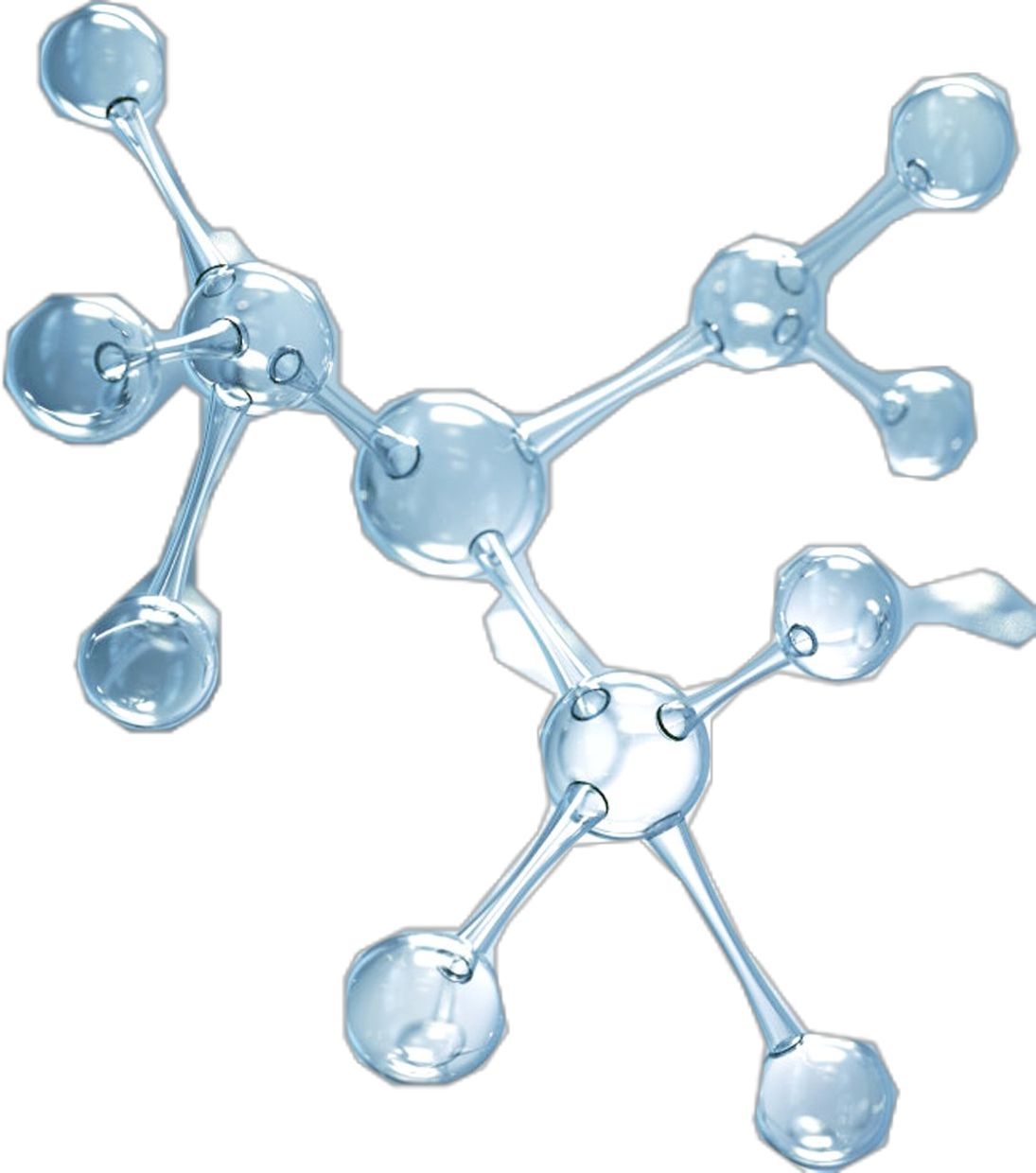
- M Units: Provide flexibility and organic compatibility. The M-unit in MQ silicone resin has a chemical structure with the general formula (R₃SiO₁/₂), where R typically represents a methyl group (-CH₃) or an organic group like vinyl.
- Q Units: Build a rigid inorganic siloxane network core. The Q-unit in MQ silicone resin is characterized by a tetrafunctional siloxane structure with the formula (SiO₄/₂), forming a highly cross-linked, three-dimensional network structure.
- Methoxyl Groups: Provide active crosslinking sites, replacing traditional crosslinkers (such as TEOS – tetraethyl orthosilicate).
The molecular size of MQ silicone resin can be adjusted by varying the molar ratio of M to Q units, affecting its physical properties such as density and viscosity. By doing so, manufacturers can adjust the molecular weight to optimize the raw material for either a solid powder form or a colorless transparent liquid.
2. Reinforcement Mechanism: Nanoscale 3D Network
When MMQ is added to hydroxyl-terminated polydimethylsiloxane (107 RTV polymer), it acts not merely as a crosslinker. Microscopically, its spherical resin particles function as “nanoscale reinforcing cores.” They distribute evenly at the molecular level, forming a highly cross-linked and dense three-dimensional network structure.
II. Performance Data: Unveiling MMQ’s Dominance
Experiments compared the performance of silicone rubber cured with a traditional crosslinker (TEOS) against that of those using varying proportions of the MMQ self-reinforced crosslinker. The results demonstrate that MMQ modifies RTV silicone rubber comprehensively:
1. A Qualitative Leap in Mechanical Strength
Compared to the unreinforced samples, silicone rubber incorporating 10 parts of MMQ exhibited an astonishing mechanical upgrade:
- Hardness: Increased by 26.4 A.
- Tensile Strength: Increased by 2.68 MPa. This means the material can withstand much harsher physical stretching without fracturing.
- Elongation at Break: Improved by 65.1%. This breaks the traditional curse of reinforcing materials where “harder means more brittle,” achieving a simultaneous growth in both strength and toughness.
As an example, vinyl MQ silicone resin forms dense, uniform films with high hardness, tear strength, and abrasion resistance, contributing to enhanced durability in various applications.

2. Perfect Retention of Optical Clarity
This is the core advantage of MQ silicone resin reinforcement. Because MMQ and the silicone rubber backbone have highly matched refractive indices, the cured silicone rubber maintains excellent light transmittance. This is crucial for applications such as optical lens encapsulation, LED packaging, and medical-grade observation windows.
This resin achieves light transmittance of ≥ 98% and has a refractive index of approximately 1.405–1.41, making it ideal for applications in LED encapsulants and optical coatings. In the electronics industry, MQ silicone resin is utilized for LED encapsulation and optical silicone applications, enhancing clarity and thermal stability in LED lenses and potting compounds.
3. Extension of Thermal Stability
Thermogravimetric Analysis (TGA) data indicated that the introduction of MMQ delayed the mass loss of the material at high temperatures.
- Significant Delay in 10% Mass Loss Temperature: This proves that the tight 3D crosslinked network of MMQ effectively restricts the degradation of polymer chains at high temperatures, enhancing the material’s reliability in extreme thermal environments.
Vinyl MQ silicone resin maintains stability from –60 °C to +300 °C, and after full curing, films can withstand temperatures up to 800 °C with excellent integrity. MQ silicone resin is widely used in high-temperature coatings for protective and decorative applications on metal, glass, and industrial components exposed to extreme heat.
III. Industry Perspective: Why Should R&D Engineers Care About MMQ?
For medical device manufacturers and electronic component producers, this research holds immense commercial translation value:
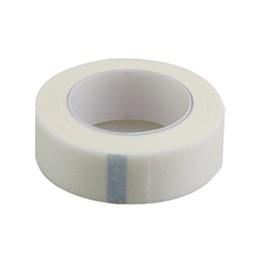
- High-End Medical Consumables: The MMQ reinforcement formulation produces no harmful byproducts other than ethanol, and it boasts extreme tear resistance and transparency. It is the ideal choice for medical-grade respiratory masks, drainage tubes, and transparent catheters. Because it is a non-toxic, odorless, and bio-inert material, it is used in medical silicone tapes, wound care products, and orthopedic devices. It is also utilized in dental impression materials for high precision and detail reproduction. Furthermore, it generally has a very low VOC (volatile organic compound) content, which is crucial for medical, electronics, and food-contact applications.
- Precision Electronic Encapsulation: In scenarios requiring low-viscosity potting combined with high mechanical protection, MMQ can replace a portion of silica filler, reducing the bubble generation rate during production and improving yield.
- Specialty Sealants: For sealing applications in aerospace that demand strict resistance to extreme temperature fluctuations, the thermal stability and elastic recovery provided by MMQ are irreplaceable.
MQ silicone resin serves as a reinforcing filler in liquid silicone rubber (LSR), improving mechanical strength, elasticity, and transparency, making it suitable for medical and industrial applications. Vinyl MQ silicone resin enhances silicone rubbers, adhesives, and coatings without sacrificing clarity or flexibility.
MQ silicone offers high resistance to UV radiation, aging, and moisture, making it suitable for outdoor construction sealants and aerospace coatings. As a premium building sealant addition, its hydrophobic nature makes it highly effective in water-resistant coatings for construction materials and as a waterproof additive in sealants. When applied to fabrics and construction materials like a floor tile, it provides a hydrophobic effect by altering the contact angle, while improving abrasion and chemical resistance.
The resin is also employed in silicone pressure-sensitive adhesives (PSAs), enhancing tack, cohesion, and temperature resistance in various adhesive formulations. Additionally, MQ silicone resin is used in mold release agents, functioning as a durable non-stick additive in formulations for rubber and plastics, significantly increasing the number of release cycles. Outside of industrial applications, it is even used in the production of high-end cosmetics like long-wear lipsticks and foundations due to its excellent film-forming properties and water resistance.
IV. Conclusion: Entering the Era of “Molecularly Customized” Reinforcement
This research clearly demonstrates that MQ Silicone Resin (especially the vinyl and modified series) is no longer just a simple additive; it is the “foundational lever” for regulating the macroscopic physical properties of polymers.
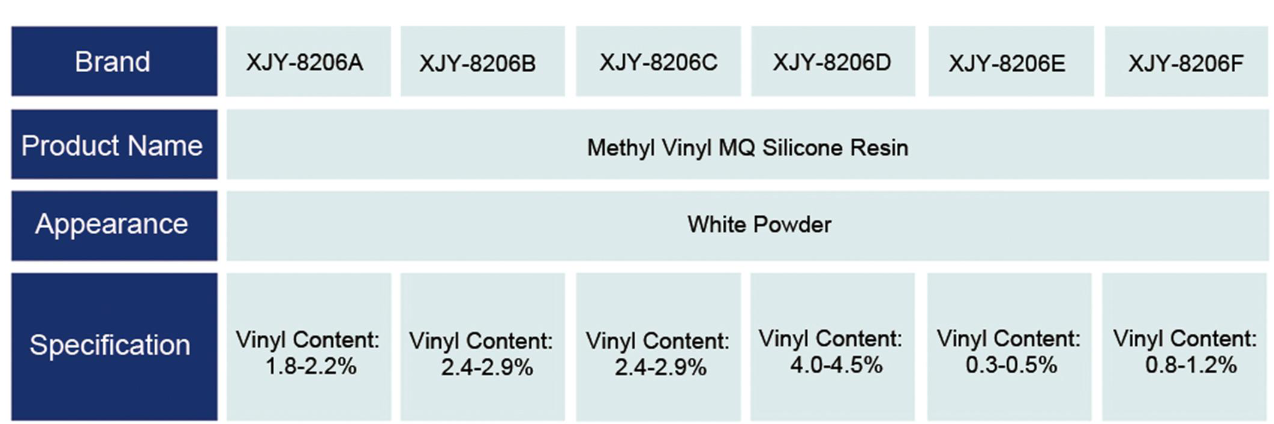
As a professional Custom Silicone Resin Manufacturer, XJY Silicones provides the XJY-8206 Series (Vinyl MQ Resin), which is the exact foundational raw material for this type of high-performance modification. We can precisely adjust the M/Q ratio and vinyl content according to your specific application scenarios, helping you develop next-generation, high-performance silicone rubber products with “self-reinforcing” characteristics.
Whether the preparation requires a colorless transparent liquid, a fine powder, or dilution in a solvent like toluene for optimal viscosity and storage, these silicone resins deliver excellent properties. The vinyl group allows for rapid curing via platinum-catalyzed hydrosilylation, often enabling UV curing systems.
Want to get more technical formulations and sample support regarding MQ silicone resin-modified silicone rubber?
Welcome to contact the technical experts at XJY Silicones. We will provide you with comprehensive material support from academic mechanisms to large-scale mass production, helping your products maintain outstanding performance in extreme environments!



_1-1.jpg)