 English
 Spanish
 French
 German
 Russian
 Japanese
 Korean
 Portuguese
A foundation can resist water yet transfer when rubbed. A lip color can stay in place but feel tight after drying. A sunscreen film can look uniform at rest and develop cracks when the surface moves.
These problems call for different formulation decisions. Choosing MQ silicone resin for cosmetics starts with identifying how the film fails, then matching resin structure, delivery form and carrier to the formula.
This guide explains when to evaluate S8205 powder, S8205 carrier-based liquids, 8205-X pure liquid MQ resin, and the MQ/T blend XJY-82012. Explore the MQ silicone resin category for the broader range, or use the problem-based selection steps below.
Why does water-resistant makeup still transfer or crack?
Water repellency is one part of wear performance. A film must also remain attached, tolerate movement and withstand contact with oils and rubbing. Increasing resin dosage may change several of these properties at once, so more resin does not automatically solve the underlying problem.
Start with the failure you can observe:
| Formulation problem | What to investigate | Initial development route |
|---|---|---|
| Color washes off after water exposure | Film continuity and water resistance | Screen an MQ film former in the intended carrier |
| Makeup stays on until it is rubbed | Transfer, adhesion and rub resistance | Evaluate these separately from water repellency |
| Film feels tight or cracks during movement | Flexibility, film thickness and resin/oil balance | Compare an appropriate MQ grade with an MQ/T blend |
| Powder incorporation is slow or inconsistent | Dissolution and processing conditions | Compare powder with a compatible pre-dissolved grade |
| Two “liquid MQ resins” behave differently | Carrier, resin content and viscosity measurement | Compare their actual compositions before substitution |
These are screening routes, not guaranteed fixes. Keep pigment loading, application thickness and drying conditions consistent when comparing candidates.
What is the difference between MQ resin and an MQ/T blend?
MQ resin contains monofunctional M units and tetrafunctional Q units. A common structural expression is:
[(CH₃)₃SiO₁/₂]ₓ[SiO₄/₂]ᵧ
This architecture supports film formation and water repellency. Film hardness and flexibility vary by grade. A relatively hard MQ film may need a more flexible partner when the application involves repeated surface movement; the MQ label alone does not mean every grade produces the same film.
T-propyl resin, or polypropylsilsesquioxane, has the structural expression:
[CH₃CH₂CH₂SiO₃/₂]ₓ
The T-propyl component provides another way to adjust flexibility and compatibility with organic oils. An MQ/T combination brings these properties together with MQ film formation. For this route, XJY-82012 MQ/T film former is a product to evaluate.
The T-propyl expression describes that component, not a single molecular formula for the whole blend.
Which XJY product form should you evaluate?
S8205 powder: when you want to select the carrier yourself
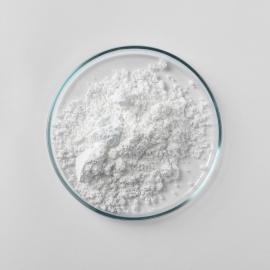
S8205, also listed as XJY-8205, is a white MQ resin powder. It is an option when your process includes a controlled dissolution step and you want to choose the solvent system independently.
The exhibition report lists 100% resin content and particle size below 150 μm as general properties. Review the S8205 / XJY-8205 Trimethylsiloxysilicate product page for the available forms and request the current technical data sheet for your trial.
S8205 liquids: when you want resin supplied in a carrier
The C, M and I versions use different carriers:
| Grade | Carrier | Resin content in the exhibition report | Viscosity in the report |
|---|---|---|---|
| XJY-8205-C | Cyclopentasiloxane | 50% | 70–200 mPa·s |
| XJY-8205-M | Dimethicone | 50% | 300–700 mPa·s |
| XJY-8205-I | Isododecane | 50% | 3–10 mPa·s |
A supplied solution can remove the separate powder-dissolution step, but the carrier becomes part of the formula. Account for it in the total oil/solvent balance and evaluate drying, compatibility and the final film.
See the cyclopentasiloxane-based MQ resin solution and isododecane-based MQ resin solution pages. The shared Trimethylsiloxysilicate product table also lists the dimethicone version.
8205-X: a separate pure liquid product
8205-X is a pure liquid MQ resin product, separate from the S8205-C/M/I carrier solutions. The general properties supplied for the exhibition report are 3700 cSt viscosity and 4.07% volatile matter.
These values do not establish its resin content or make it interchangeable with a carrier solution. Also, cSt and mPa·s describe different viscosity quantities; do not compare the numbers directly without the necessary density and measurement conditions. Ask for the current test conditions and composition information when requesting an 8205-X sample.
82066 and 82083: white solid silicone resins
The report identifies 82066 and 82083 as white solid silicone resins. It does not provide additional general-property specifications for them in the selection table. Request grade-specific information rather than assigning a hardness, resin content or viscosity from another product.
For these grades, contact XJY with your formulation requirements.
XJY-82012: when flexibility and durable wear need to work together
XJY-82012 is a white powder MQ/T resin blend with the INCI designation Trimethylsiloxysilicate / Polypropylsilsesquioxane. It is a candidate when the development brief combines transfer and wash-off resistance with a comfortable, flexible film.
It belongs in the solid powder route. Review the XJY-82012 product details for its general properties and application information before setting up a comparison.
How should you compare powder and liquid MQ resin fairly?
Compare at the same active resin level, then rebalance the carrier. Equal additions of powder and solution do not necessarily give equal resin loading.
For a calculation example, 4% addition of a solution containing 50% resin contributes 2% active resin and 2% carrier. A 100%-resin powder contributes 2% active resin at 2% addition. This arithmetic is a comparison method, not a recommended use level.
Use the actual resin content on the current technical documentation. After adjusting active content, keep the other formulation variables controlled so that a carrier change is not mistaken for a resin-performance difference.
What can contact-angle testing tell you about water and oil resistance?
Contact-angle screening can help compare wetting behavior. It does not by itself prove finished-product waterproofness, transfer resistance or wear duration.
XJY’s exhibition report includes an internal 82066 comparison at a resin-to-carrier ratio of 1:1. The reported water-contact-angle readings were:
| Carrier | 82066: initial / 2 minutes | Unnamed comparator: initial / 2 minutes |
|---|---|---|
| D5 | 109.752° / 107.694° | 109.046° / 106.476° |
| Methyl trimethicone, grade 058 | 109.693° / 106.945° | 107.752° / 104.495° |
| Isododecane | 108.980° / 107.285° | 108.396° / 105.566° |
Within those reported conditions, 82066 showed higher contact angles at both time points. The report also includes an oil-wetting comparison and separate bending and stretching observations. The latter describe comparable flexibility to the unnamed reference, rather than a flexibility advantage.
These results are internal screening observations. The report does not supply a complete reproducibility protocol or statistical analysis, so they should guide further evaluation rather than support a blanket superiority claim. Test the finished formula for the actual exposure and wear requirements.
How do you turn a formulation problem into a product shortlist?
For foundation that cracks during facial movement: compare the current MQ grade with an MQ/T route such as 82012. Observe the dried film under movement and check whether the change preserves adhesion and transfer resistance.
For lip or eye color that transfers: separate dry rubbing, water exposure and oil exposure in your screening. This helps identify whether you need to change resin selection, carrier balance or the overall film system.
For slow powder incorporation: compare S8205 powder against a C, M or I solution that fits the formula. Include processing time, carrier contribution and final appearance in the comparison.
For sun-care films: evaluate film uniformity, flexibility and retention in the finished formula. A film former can be part of sun-care development, but it does not establish an SPF value or finished-product water-resistance claim on its own.
Browse the cosmetic silicone ingredients range when the brief also involves other sensory or film-forming ingredients.
Frequently asked questions
Is every MQ silicone resin a hard film former?
No. Film properties vary by grade. Select against the required flexibility and wear performance rather than treating all MQ resins as identical.
Is a liquid MQ resin always a resin solution?
No. The S8205 C/M/I products are carrier-based solutions, while the report identifies 8205-X separately as a pure liquid product. Check the full composition and technical documentation.
Can XJY-82012 replace MQ powder one-to-one?
A direct substitution should not be assumed. 82012 is an MQ/T blend, so compare it against the existing system at controlled active content and evaluate the complete film properties.
What information should I send when requesting samples?
Send the product type, current carrier system, target active resin level, processing conditions and the failure you want to solve. Include the existing grade and comparison method if available.
Build your shortlist with XJY Silicones
Start with the MQ resin category, then compare S8205 powder and carrier solutions with the 82012 MQ/T film former. For 82066, 82083 or 8205-X, request grade-specific technical data and samples.
Tell us whether your main challenge is water exposure, oil contact, transfer, cracking or incorporation. That gives the sample discussion a clear starting point and helps you compare candidates against the same formulation problem.