 English
  Spanish
  French
  German
  Russian
  Japanese
  Korean
  Portuguese
 Are your thermal interface materials cracking, bleeding oil, or losing thermal conductivity under extreme conditions? High-performance electronics, EV battery systems, and 5G equipment demand thermal pads and gels with stable heat dissipation, low oil bleeding, and long-term reliability. However, ultra-high filler loading often destroys elasticity and processability. Poor formulations may also cause silicone oil migration, insulation failure, or flame-retardant instability. To solve these challenges, many leading thermal management manufacturers increasingly rely on VMQ and methyl vinyl mq resin technologies to create durable, customizable, and high-performance thermal conductivity materials.
VMQ resin is widely used in thermal conductivity materials because it improves filler reinforcement, reduces oil bleeding, enhances thermal stability, and optimizes rheology for automated dispensing. Compared with conventional silicone systems, methyl vinyl mq resin provides stronger crosslinking networks, better compatibility with high filler loading, and superior long-term reliability in automotive, aerospace, and electronic applications.
As thermal management standards continue to rise across electric vehicles, CPUs, AI servers, and industrial electronics, choosing the right silicone resin structure becomes increasingly important. The following sections explain how VMQ technology helps manufacturers, OEM brands, and thermal material suppliers achieve stable and efficient thermal conductivity performance.
Key Features of VMQ
Excellent Reinforcement Under Ultra-High Filler Loading
Thermal conductivity materials typically require massive amounts of conductive fillers such as aluminum oxide, aluminum nitride, boron nitride, or graphite. In many advanced thermal pads and gels, the filler ratio can exceed 80%. Without structural reinforcement, the compound becomes brittle, powdery, and difficult to process.
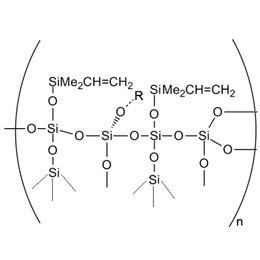
VMQ, especially methyl vinyl mq resin, forms a three-dimensional nano-scale network that binds fillers together while maintaining flexibility and mechanical strength. This network significantly improves tear resistance, elasticity, and structural integrity. As a result, many thermal conductivity material manufacturers and OEM suppliers prefer VMQ-enhanced systems for high-performance applications.
Ultra-Low Oil Bleeding Performance
Oil bleeding is one of the biggest risks in thermal interface materials. Over time, low-molecular-weight silicone fluids may migrate from the thermal pad or grease onto nearby electronic components. This contamination can attract dust, reduce electrical reliability, and even create insulating layers on sensitive contacts.
The active vinyl and silanol functional groups inside silicone resin systems allow VMQ to deeply crosslink with liquid silicone rubber matrices. This stronger network traps silicone fluids within the structure and dramatically reduces migration. For automotive electronics, battery cooling systems, and telecommunications equipment, low bleeding performance is critical for long-term operational safety.
Outstanding Heat Resistance and Flame Retardancy
Modern electronic systems operate in extremely harsh environments. EV battery modules, inverter systems, industrial power supplies, and aerospace electronics may experience continuous thermal cycling between -60°C and 200°C. Standard organic polymers often fail under these conditions.
The backbone of VMQ silicone contains highly stable Si-O-Si bonds with exceptional thermal resistance. During high-temperature exposure, VMQ systems can assist conductive fillers in forming dense ceramic-like protective layers, improving flame retardancy and thermal stability. This property helps many thermal conductivity products achieve demanding standards such as UL94 V-0.
Precise Rheology Control for Automated Dispensing
Automated production lines require thermal gels and greases with carefully controlled flow behavior. Materials must flow smoothly during dispensing but quickly maintain shape after application. Poor rheology can result in uneven coating, overflow, or air entrapment.
By adjusting the molecular weight and particle distribution of methyl vinyl mq resin, manufacturers can accurately tune thixotropic behavior and viscosity. This allows customizable formulations optimized for robotic dispensing, screen printing, or automated assembly systems. For ODM and OEM thermal material production, rheology control directly affects manufacturing efficiency and product consistency.
Types of VMQ
Standard VMQ Silicone Resin
Standard VMQ materials are widely used in general-purpose thermal pads, thermal gels, and heat dissipation compounds. They offer balanced flexibility, compatibility, and thermal stability for consumer electronics and industrial devices.
Methyl Vinyl MQ Resin
Methyl vinyl mq resin is one of the most important materials for high-end thermal conductivity applications. The vinyl functionality enhances crosslinking efficiency, improves mechanical strength, and increases compatibility with addition-cure silicone systems. This type is commonly used by advanced thermal conductivity manufacturers and silicone resin suppliers targeting automotive and aerospace markets.
Customizable Functional VMQ Systems
Some thermal conductivity suppliers require customized VMQ systems with controlled vinyl content, silanol content, or particle size distribution. These formulations help balance hardness, tensile strength, compression set, and rheological properties according to customer-specific requirements.
As a professional Manufacturer, Supplier, and Wholesaler, XJYSilicones supports Customizable, OEM, and ODM development for thermal conductivity applications requiring specialized VMQ performance.
Why Use VMQ?
Improved Thermal Conductivity Reliability
Stable thermal conductivity performance is essential for CPUs, GPUs, EV batteries, LED systems, and telecommunications equipment. VMQ-enhanced thermal materials maintain stable interfaces even after long-term thermal cycling and mechanical compression.
The structural reinforcement from silicone resin technology helps maintain close contact between fillers and surfaces, reducing thermal resistance and improving heat transfer efficiency over time.
Better Processing and Manufacturing Efficiency
Compared with traditional silicone systems, VMQ materials provide superior filler dispersion and process stability. This simplifies mixing, coating, molding, and dispensing operations for thermal conductivity manufacturers.
For large-scale OEM production, stable processability reduces defects, improves consistency, and supports high-speed automated manufacturing. This is especially important for EV battery cooling systems and AI server thermal management applications.
Long-Term Durability in Harsh Environments
Thermal interface materials are often exposed to vibration, moisture, UV radiation, and repeated heating cycles. VMQ-based formulations maintain flexibility and mechanical integrity even under aggressive operating conditions.
This long-term durability makes VMQ silicone highly suitable for automotive electronics, aerospace systems, industrial power modules, and outdoor communication infrastructure.
Conclusion
VMQ and methyl vinyl mq resin play a critical role in modern thermal conductivity materials by improving reinforcement, reducing oil bleeding, enhancing thermal stability, and optimizing processability. For manufacturers, suppliers, wholesalers, OEM, and ODM thermal solution providers, VMQ technology offers a reliable path toward safer and higher-performance thermal management systems.