 English
  Spanish
  French
  German
  Russian
  Japanese
  Korean
  Portuguese
 In the modern LED lighting, display panel, and specialty coatings industries, engineers constantly face a classic challenge: How do we perfectly eliminate harsh glare and achieve a soft, uniform optical effect while maintaining extremely high light transmission?
Light diffusion agents improve visual environments by eliminating hot spots, reducing glare, softening shadows, and increasing efficiency. These agents are used in LED lighting, consumer electronics, automotive applications, and cosmetics to achieve a soft-focus effect. Light diffusion agents can be classified into inorganic and organic types, with inorganic agents including materials like nano-barium sulfate and calcium carbonate, while organic agents include silicone and acrylic resin types.
Traditional inorganic light diffusion materials (such as barium sulfate and titanium dioxide) often block light, severely reducing luminous efficacy. Inorganic light diffusion agents are typically solid microbeads that scatter light but may not allow for sufficient light transmission, while organic agents generally provide better light transmittance with minimal loss of light energy.
The latest material science research has focused its attention on a revolutionary organic-inorganic hybrid material—Polysilsesquioxane (PSQ) microspheres. This article will combine the latest academic research from the top international open-access journal Molecules to deeply analyze the outstanding performance of PSQ microspheres, and proudly recommend XJY Silicones’ star product: the XJY-801 Series Spherical Silicone Resin.
I. Why are PSQ Microspheres the Ideal “Light-Scattering Agents”?
A recently published important paper in the academic journal Molecules (2024, 29, 2841), titled “Micron-Sized Thiol-Functional Polysilsesquioxane Microspheres…”, clearly points out the core position of polysilsesquioxane (PSQ) microspheres in material science. Researchers made a highly authoritative summary in the introduction:
- Unique Backbone Advantage: Benefiting from the inorganic –Si–O–Si– backbone and variable organic groups, polysilsesquioxane (PSQ) microspheres possess unique and beneficial properties.
- Outstanding Comprehensive Performance: These properties include excellent mechanical performance, high stability, biocompatibility, excellent temperature resistance, and ease of functionalization.
- The Perfect “Light-Scattering” Carrier: Precisely based on these excellent physicochemical properties, PSQ microspheres have become ideal materials in fields such as light-scattering agents, pollutant adsorbents, and catalyst carriers.
How exactly does this scattering effect work? Light diffusion agents scatter light through microscopic particles with different refractive indices compared to the base material, causing light rays to bend and spread, which results in soft, even lighting. The effectiveness of light diffusion agents is influenced by the difference in refractive indices between the agent and the substrate; a greater difference leads to stronger light scattering. Light diffusion agents can reduce glare and create uniform lighting by scattering light, which is particularly useful in applications like LED lighting and optical lenses. Common light diffusion agents used in various applications include the ME series of organic microbeads based on silicone, highly cross-linked PMMA, and polystyrene microbeads.
XJY-801 Polymethylsilsesquioxane (Spherical Silicone Resin Powder) can be widely used in high-end transparent PC lamps, lampshades, lightboxes, flat-panel LCD light diffuser plates, etc.
Polymethylsilsesquioxane silicone microspheres are a kind of superfine spherical powder material with organic and inorganic characteristics, with a three-dimensional network spherical shape. It has good optical properties, dispersion, lubricity, heat resistance, excellent silky feel, and so on.
Moreover, the paper emphasizes the importance of controlling particle size to enhance the performance of PSQ microspheres. This exactly coincides with our core demands in industrial-grade light diffusion material applications.
II. From Laboratory to Industrial Mass Production: XJY-801 Series Spherical Silicone Resin
Transforming cutting-edge academic theories into actual productivity is exactly the strength of XJY Silicones. As a professional custom silicone resin manufacturer, we have launched the XJY-801 Series (Polymethylsilsesquioxane / Spherical Silicone Resin) that perfectly matches the academic characteristics mentioned above.
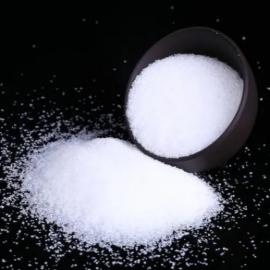
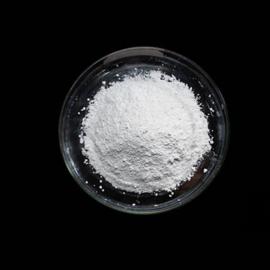
XJY-801 is a white solid powder. It maximizes the optical potential of PSQ microspheres and is recognized as a top-tier organic silicone light diffusion agent in the industry. It is widely used in high-end fields such as PC, PP, and PMMA lampshades, LED lamp covers, light boxes, flat-panel LCD PS light diffusion plates, and PET light diffusion films.
In the plastic industry, light diffusion agents are added to materials like polycarbonate and polymethyl methacrylate to improve light scattering and create a softer, more aesthetically pleasing light output. Silicone light diffusion agents are known for their excellent transparency and optical properties, providing a balanced light diffusion and high light transmission even when the light is scattered. Compared to inorganic light diffusing agents, silicone light diffusing agents have better compatibility with base resins, lower specific gravity, and higher light transmittance, making them suitable for applications requiring soft and uniform lighting.
Combining academic principles, XJY-801 has the following three core competitive advantages:
1. Precise Particle Size Control (Meeting different haze requirements)
As stated in the paper, controlling particle size is the key to improving performance. The typical particle size for diffusion agents ranges between 1 µm and 5 µm. XJY Silicones understands this well, and the XJY-801 series provides an extremely rich selection of particle sizes, including narrow particle size distributions at 1 µm, 1.3 µm, 1.5 µm, 2 µm, 3 µm, 5 µm, 15 µm, and 20 µm. Whether you need tiny particles to make ultra-thin PET light diffusion films or thick-walled PC extruded tubes, you can find the most matching optical refraction effect.
2. Perfect Optical Refractive Index (High transmittance, high haze)
The refractive index of the XJY-801 series is stable between 1.42 and 1.45. The refractive index of silicone light diffusing agents typically ranges from 1.42 to 1.45, which is lower than that of acrylics and polystyrene, allowing for higher light transmittance and haze at lower concentrations. When this diffusion agent is added to plastic substrates like PC (refractive index ~1.59) or PMMA (~1.49), this subtle refractive index difference triggers “Mie scattering.” Light is refracted in multiple directions and undergoes multiple refractions without being absorbed when passing through the microspheres, thereby transforming harsh point light sources into soft, uniform surface light sources with excellent light diffusion properties.
3. Extreme High-Temperature Resistance (Anti-yellowing)
Silicone offers high-temperature stability and superior light transmittance, making it preferable for LED applications. While acrylic transmits approximately 92% of light and is known for its outstanding optical properties and UV stability, it cannot match the robust thermal performance of silicone additives. Just as the MDPI paper emphasizes the “temperature resistance” of PSQ materials, XJY-801 exhibits astonishing thermal stability. Its heat resistance temperature reaches >400°C. This means that under high-temperature injection molding, extrusion production processes, and the long-term heat generation of high-power LED light chips, it will absolutely not melt, degrade, or yellow, ensuring excellent thermal stability and the long-lasting optical shelf life of the end products.
III. Expanded Applications of XJY-801: The “Secret Weapon” for Coatings and Films
Besides being a top-tier light diffusing agent, XJY-801 also shines in other fields due to its polymethylsilsesquioxane organic-inorganic hybrid shape and structure:
- Coatings Industry: Adding XJY-801 to specialty coatings can significantly improve the coating’s surface lubricity, scratch resistance, good dispersion, and adhesion.
- Plastic Film Industry: As an anti-blocking agent or slip agent, it prevents films from sticking together during the winding process upon contact, providing an excellent soft and smooth hand feel without obvious light loss.
These agents are utilized in various applications including optical lenses, vehicle lights, and building coatings to enhance light distribution and reduce harsh lighting effects. Furthermore, light diffusion agents are commonly used in LED lighting to reduce glare and create a more pleasant lighting experience by scattering the bright light emitted from LEDs. This plays an obvious role in improving visual safety and comfort.
Conclusion: Choose XJY Silicones, Customize Your Exclusive Optical Solutions
Whether it is optical engineers pursuing ultimate brightness and high light transmission, or formulation experts seeking scratch-resistant coating solutions, Polysilsesquioxane (PSQ) microspheres have shown immense potential. By maintaining a good balance of high haze and high transmittance, these tiny particles preserve the impact strength of plastics while enabling uniform light.
The XJY-801 silicone light diffuser series, with its >400°C heat resistance limit, precise refractive index of 1.42-1.45, and full particle size coverage from 1-20 µm, is exactly the key for you to break through material performance bottlenecks.
[Contact the XJY Silicones Technical Team Today] to get detailed test samples, customized solutions, and technical formulation services for XJY-801!