 English
  Spanish
  French
  German
  Russian
  Japanese
  Korean
  Portuguese
 A coating can appear fully cured yet still develop scratches, blocking, surface tack, or an unpleasant dragging feel. These problems are common in coated films, synthetic leather, plastic coatings, wood finishes and other products that are stacked, rolled or frequently touched.
Increasing film hardness is not always the best solution. Scratch resistance and anti-blocking performance also depend on surface friction, contact area, coating texture and the distribution of functional particles.
Polymethylsilsesquioxane for coatings is a spherical silicone resin powder that modifies the coating surface. It can reduce friction, improve scratch and mar resistance, support anti-blocking, create a smooth feel and improve surface water repellency.
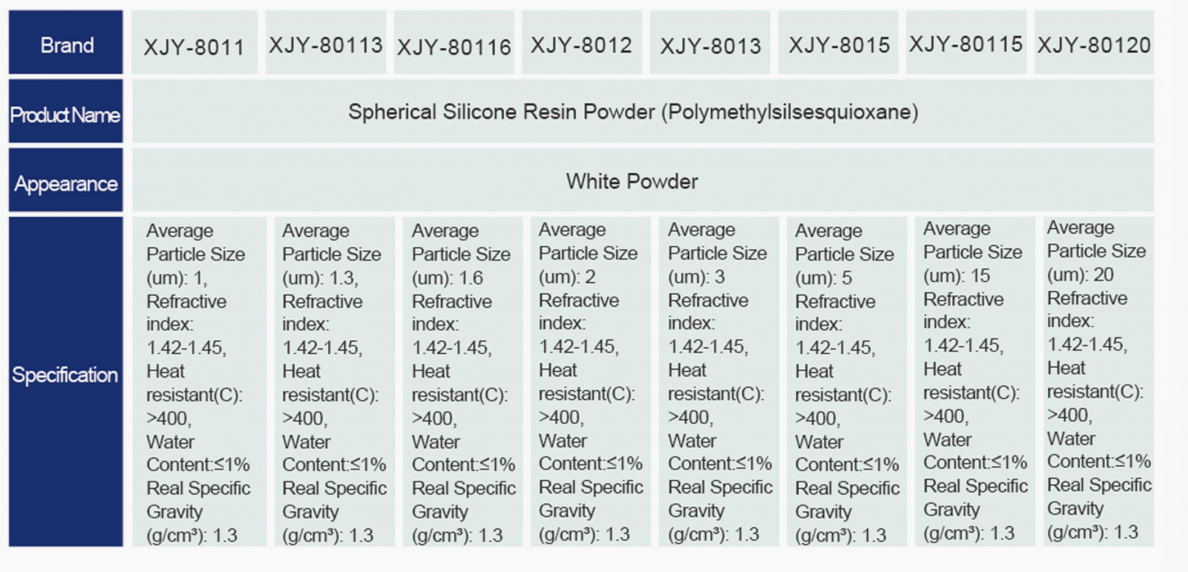
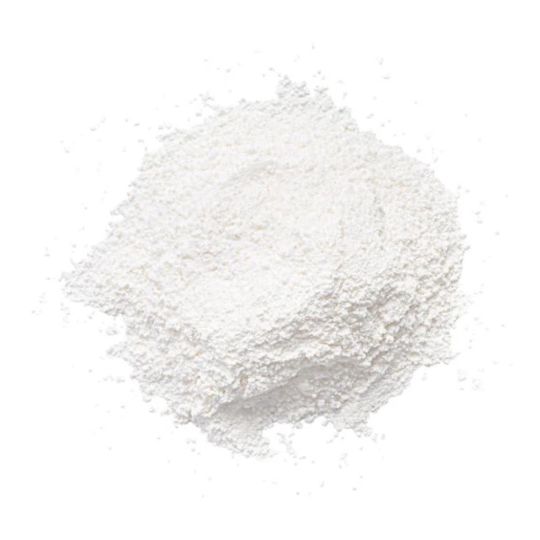
The XJY-801 series consists of white spherical polymethylsilsesquioxane powder available in different particle-size grades from approximately 2 to 10 μm. It is designed as a multifunctional coating surface modifier rather than a primary film-forming resin or conventional bulk filler.
What Is Polymethylsilsesquioxane Powder?
Polymethylsilsesquioxane, commonly abbreviated as PMSQ, is a highly crosslinked organosilicon polymer. In simplified chemical terms, it is a polymer formed from the silicone precursor methyltrimethoxysilane through hydrolysis and condensation.
During hydrolysis and condensation, the precursor forms a three-dimensional siloxane network containing hydrophobic methyl groups. The resulting polymethylsilsesquioxane is an insoluble, non-melting and chemically stable resin powder.
Unlike soluble silicone resin, the crosslinked round particles remain as discrete functional microspheres in the coating formulation. Their spherical structure helps create more uniform contact points than many irregular mineral fillers. This makes polymethylsilsesquioxane suitable for modifying surface friction, texture, and water repellency.
The XJY-801 Polymethylsilsesquioxane series can be evaluated for several related functions:
- Improving scratch and mar resistance
- Supporting anti-blocking performance
- Reducing surface friction
- Providing smooth slip and a refined feel
- Improving surface hydrophobicity
- Supporting uniform functional-particle distribution
The final performance depends on the selected particle size, binder type, dosage, dispersion process, coating thickness and curing conditions.
How Does the XJY-801 Series Improve Scratch and Mar Resistance?
Scratch resistance is not determined by coating hardness alone. When an object moves across a coated surface, friction can produce scratches, scuffs, polishing marks or other visible damage.
Spherical polymethylsilsesquioxane particles can improve slip and reduce resistance to sliding. Lower friction makes an object less likely to drag aggressively across the film. The rigid particles may also create microscopic support points at the coating surface, helping the film resist light scratching and mechanical marking.
For this reason, the XJY-801 series is more accurately described as a silicone resin powder that can improve scratch resistance, improve mar resistance and enhance coating surface durability.
Polymethylsilsesquioxane may also support perceived surface hardness and wear resistance. However, pencil hardness mainly depends on the binder, crosslink density and curing conditions. Specific hardness improvements must be verified in the customer’s final formulation.
How Does Polymethylsilsesquioxane Improve Anti-Blocking?
Blocking occurs when two coated surfaces stick together under pressure, heat or extended storage. It can create visible surface defects when stacked sheets, coated films or rolled materials are separated.
Spherical polymethylsilsesquioxane powder creates microscopic spacing points between adjacent coating surfaces. These round particles reduce the effective contact area, making continuous adhesive contact less likely to form.
The XJY-801 series can therefore improve anti-blocking while also supporting slip and a smooth surface texture. This combined effect is useful when a coating must resist sticking without becoming excessively rough, dry or waxy.
Anti-blocking performance remains formulation-dependent. Particle size, addition level, film thickness, curing, storage temperature and pressure can all change the result. An initial test may improve after the wetting, dispersion or addition process is optimized.
Smoother Slip and a More Refined Surface Feel
Surface feel is important in synthetic leather, consumer electronics coatings, plastic coatings and frequently handled products. A high-friction coating may feel sticky, rough or difficult to slide across.
The spherical structure of polymethylsilsesquioxane creates a more uniform sliding effect and reduces the dragging sensation associated with tacky surfaces. Unlike irregular mineral fillers, spherical silicone resin particles can improve slip while maintaining a fine, smooth texture.
Different coating products require different sensory profiles. Some need a dry, silky feel, while others require only a moderate reduction in friction. Both instrumental friction testing and practical touch evaluation are recommended.
Supporting Surface Water Repellency
Polymethylsilsesquioxane contains a hydrophobic methyl-siloxane structure. When uniformly distributed in a coating, it can reduce water wetting and improve surface water repellency.
However, the XJY-801 series is not a substitute for the main waterproofing resin. Overall water resistance also depends on binder selection, film continuity, adhesion, coating thickness and surface defects. Polymethylsilsesquioxane should be positioned as a functional powder that supports hydrophobic surface performance within a complete coating formula.
How to Choose an XJY-801 Particle Size
Particle size influences surface smoothness, slip, anti-blocking efficiency, gloss and optical appearance. The XJY-801 series offers particle-size grades within an approximately 2–10 μm range.
Finer particles can be evaluated when a delicate feel and smooth appearance are the main priorities. Medium-size particles may provide a balanced combination of slip, surface uniformity and anti-blocking. Larger particles may create a stronger spacing effect but require careful testing for roughness, gloss and transparency.
Products with similar average particle sizes do not necessarily perform identically. Particle-size distribution, morphology, surface chemistry and dispersion can all affect the finished film. Formulators should test the selected grade in the intended coating system.
How to Disperse the XJY-801 Series in Coatings
Good dispersion is essential for obtaining consistent surface performance. Poorly wetted polymethylsilsesquioxane powder may form agglomerates, produce localized defects or create uneven texture.
The powder may be pre-wetted with a compatible carrier before being added to the formulation. The correct wetting agent, carrier and dispersion process should be selected according to whether the coating is waterborne, solventborne or UV-curable.
A laboratory evaluation should consider:
- Adding the powder gradually to reduce floating and dust.
- Pre-wetting it with a carrier compatible with the resin system.
- Applying sufficient mixing to break soft agglomerates.
- Comparing different addition stages and dispersion times.
- Checking viscosity, gloss, transparency and surface appearance.
- Testing friction, blocking and scratch resistance after full curing.
There is no universal dosage for every type of coating. The appropriate addition level depends on particle size, film thickness, binder chemistry, required surface properties and other additives in the formula.
XJY-801 Series vs. Silica and Wax Additives
Silica, wax, and polymethylsilsesquioxane can all modify coating surfaces, but their functions are not identical.
Silica is widely used for matting, rheology control, and anti-blocking. Some silica products may increase roughness or require intensive dispersion. Wax additives can improve slip, abrasion resistance and release, but wax migration or incompatibility may affect adhesion, recoating and appearance.
The XJY-801 series provides rigid, crosslinked and spherical silicone particles that combine slip, refined texture, scratch resistance, anti-blocking and hydrophobic surface modification. Depending on the formulation, polymethylsilsesquioxane may be used independently or combined with silica or wax to achieve a specific performance balance.
Frequently Asked Questions
Does polymethylsilsesquioxane increase coating hardness?
It may support perceived surface hardness and resistance to mechanical marking, but it is not primarily a film-hardening additive. Pencil hardness is mainly controlled by the binder, crosslink density and curing process.
Can the XJY-801 series improve anti-blocking?
Yes. Its spherical particles can reduce direct contact between two coated surfaces and support improved anti-blocking. Results should be verified under the required temperature, pressure and storage conditions.
Is the XJY-801 series suitable for waterborne coatings?
The series can be evaluated in waterborne, solventborne and UV-curable coatings. Wetting and dispersion must be adapted to each formulation.
Which XJY-801 particle size should be selected?
The selection depends on film thickness, gloss, transparency, surface feel and anti-blocking requirements. Laboratory screening is recommended before choosing a commercial grade.
Is XJY-801 a direct replacement for every silicone powder?
No. Powders with different polymer structures, elasticity, particle shapes or surface chemistry can produce different effects. Comparisons should be made with other spherical polymethylsilsesquioxane products and verified in the final coating formula.
Evaluate the XJY-801 Series in Your Coating System
The XJY-801 series includes spherical polymethylsilsesquioxane powders developed for coating surface modification. Selecting the right particle-size grade can help improve scratch and mar resistance, anti-blocking, slip, surface feel and water repellency.
Contact XJY Silicones to request samples, technical information or assistance in selecting an XJY-801 grade for your waterborne, solventborne or UV-curable coating formulation.



.jpg)