 English
  Spanish
  French
  German
  Russian
  Japanese
  Korean
  Portuguese
 Are you evaluating a silicone pressure-sensitive adhesive alternative because of supply changes, cost pressure, or a new tape specification? A grade that works in a PET tape may not deliver the same peel, tack, unwind, or residue performance on PI, PTFE, fiberglass cloth, or another backing. Even products positioned for the same application can behave differently when coating thickness, curing conditions, solvent system, and test method change.
The practical answer is to use an international-grade comparison only as a screening map. First match the curing system and application profile, then compare candidate samples on the same substrate, at the same dry adhesive thickness, with the same formulation, curing schedule, conditioning time, and peel method. This article summarizes the documented XJY Silicones PSA benchmark routes for DOWSIL, Momentive, and Bluestar reference grades without treating them as universal drop-in equivalents.
Why a Silicone PSA Grade Name Is Not Enough
Silicone PSAs are selected by the balance between interfacial adhesion and internal cohesive strength. A softer adhesive may wet a difficult surface and build initial tack more readily, while a harder, more cohesive adhesive may provide better resistance to creep or residue under heat. The final result also depends on the complete tape construction.
Before comparing two grades, record the following variables:
- Curing system: peroxide/BPO or platinum addition cure;
- backing material, such as PET, PI, PTFE, fiberglass cloth, or masking paper;
- dry adhesive thickness and coating uniformity;
- solids content, viscosity, solvent, catalyst, and primer system;
- oven temperature profile, dwell time, and coating-line speed;
- target peel force, initial tack, holding power, unwind force, and residue level; and
- conditioning, aging, and test methods.
If these conditions are not aligned, a numerical comparison can be misleading. A higher peel result is not automatically better when the real requirement is clean removal, easy unwind, low migration, or stable performance after high-temperature exposure.
Documented XJ Silicone PSA Alternative Grade Map
The following map is based on XJY project comparison material. It identifies practical starting points by application and performance profile. The relationships should be verified through matched laboratory and coating-line trials before a production change.
| XJY Grade | Documented Reference Grades | Primary Application Route | Screening Focus |
|---|---|---|---|
| XJY-301-1 | Bluestar 416; Momentive 210 | Low-peel PET tape and aluminum-substrate protection | Softness, conformability, low peel, cohesion, and peel stability over time |
| XJY-301-4 | DOWSIL 7366 | PI tape | Softer adhesive profile, initial tack, peel force, and solids-related coating behavior |
| XJY-301-5 | DOWSIL 7268; Bluestar 408 | Transparent PET tape, high-temperature green tape, masking tape, and fiberglass cloth | Transparency, yellowing, wetting, unwind, peel, and appearance at the required thickness |
| XJY-301-7 | DOWSIL 7268; Bluestar 408 | PI, PET, fiberglass cloth, and PI-film-wrapped wire | Temperature resistance, stability, adhesive-layer clarity, and unwind force |
| XJY-301-8 | Momentive 610; Bluestar 418 | High-peel PI and PET tapes, including CNC tape applications | High cohesion, peel strength, high-temperature residue, hardness, and initial tack |
| XJY-301-10 | Momentive 610; Bluestar 418 | PI, PET, and PTFE high-temperature tapes | PTFE compatibility, peel, cohesion, unwind, and release-film compatibility |
| XJY-301-12 | DOWSIL 7388 | PI, PET, and PTFE tapes requiring a softer adhesive profile | Initial tack, conformability, transparency, peel, and cohesion balance |
| XJY-301-16 | DOWSIL 7388 | PI, PET, and fiberglass-cloth tapes | Higher-temperature bonding, fiberglass compatibility, hardness, and solids profile |
| XJY-301-30 | Momentive 610E | PI, PET, and PTFE high-performance tape systems | High-molecular-weight route, cohesion, peel, and performance at a lower solids level |
| XJY-3001 | DOWSIL 7406-VLO / DOWSIL 7406 | PI, PET, and PTFE tapes with low-VOC or low-exudation requirements | Volatile profile, extractables or exudation, peel, tack, and heat resistance |
| XJY-3201 | Momentive 518 | Phenyl silicone PSA for high-temperature PI tape | High-temperature adhesion, holding power, peel, tack, and phenyl-system compatibility |
Important: This table describes documented benchmark categories, not guaranteed one-to-one equivalence. Product suitability must be confirmed under the customer’s actual formulation, substrate, coating, curing, and test conditions.
How to Select the Right XJY PSA Starting Point
Low-Peel PET and Protective Tape
For a low-peel PET construction, begin with XJY-301-01 or XJY-301-1 silicone pressure-sensitive adhesive. The published XJY data positions XJY-301-01 at 50-80 g/inch and XJY-301-1 at 150-350 g/inch on PET under the stated reference constructions. These values should be treated as product-selection guidance because peel changes with adhesive thickness, substrate treatment, curing, dwell time, and test method.
Transparent PET and General High-Temperature Tape
XJY-301-5 is the documented starting route for transparent PET tape, high-temperature green tape, masking paper, and selected fiberglass applications. The key evaluation points are clarity, yellowing, wetting, peel, and unwind behavior. XJY-301-7 covers PI, PET, fiberglass cloth, and related high-temperature tape constructions where temperature stability and a clear adhesive surface are important.
High-Peel PI, PET, and CNC Tape
XJY-301-8 is the higher-cohesion screening route for demanding PI and PET tapes. XJY-301-10 provides another high-peel route with documented use on PI, PET, and PTFE. For a tape that needs both high peel and stronger initial wetting, a converter may need to evaluate a controlled blend with a softer grade rather than selecting the hardest grade alone. Any blend should be requalified for cohesion, residue, and thermal aging.
PTFE and Fluorinated Release Systems
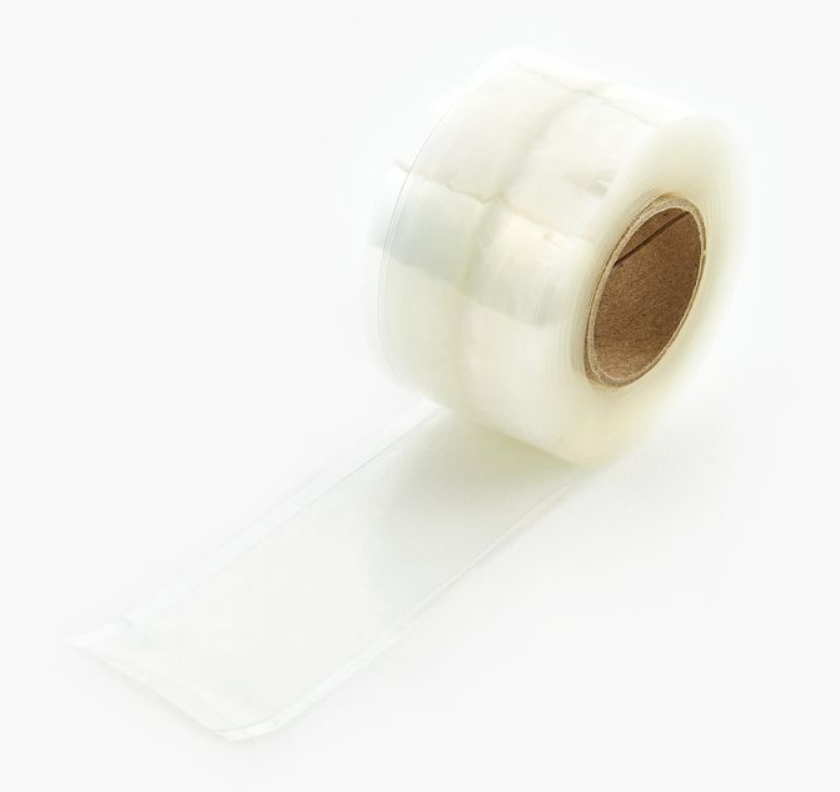
PTFE and fluorinated materials require special attention to wetting and release-film compatibility. XJY-301-10, XJY-301-12, and XJY-3001 are documented starting routes for PTFE-containing constructions. Evaluate them with the actual PTFE treatment, primer, release liner, and coating thickness used in production.
Low-VOC and High-Temperature Phenyl Routes
XJY-3001 is positioned for tape systems where a low-VOC or low-exudation profile is a priority. XJY-3201 phenyl silicone PSA is the documented route for high-temperature PI tape. Do not transfer temperature claims from one tape construction to another without confirming exposure time, substrate, peel method, and failure mode.
What About Platinum-Cured Silicone PSA?
The competitor map above primarily covers peroxide-cured grades. XJY also offers the XJY-302 platinum-cured series for PET protective films and related applications. The project documentation positions different XJY-302 grades across low, medium, and higher peel ranges, with options emphasizing wetting, time stability, low migration, controlled thermal rise, or impact-resistant protective gel performance.
Platinum-cured and peroxide-cured products should not be compared as if they were the same formulation route. Cure chemistry, catalyst sensitivity, pot life, backing heat resistance, and process conditions are different. Review the complete XJY silicone PSA series before choosing between the two systems.
How to Validate a Silicone Pressure-Sensitive Adhesive Alternative
1. Define the Existing Construction
Record the current supplier and grade, cure system, backing, primer, release liner, dry adhesive thickness, solvent, catalyst level, oven profile, and line speed. Note the current product’s strengths and the exact problem that needs to be solved.
2. Establish a Matched Test
Compare the incumbent and candidate at the same solids level and dry coating thickness. Use the same substrate batch, coating equipment, curing schedule, conditioning period, peel angle, peel speed, and test temperature.
3. Measure the Complete Performance Balance
- Initial tack and wetting;
- 180-degree or specified-angle peel force;
- static shear or holding power;
- unwind and release behavior;
- residue, migration, and cohesive failure;
- clarity, haze, and yellowing where appearance matters; and
- performance after heat aging and other required environmental exposure.
4. Confirm the Result on the Coating Line
A laboratory drawdown can identify promising candidates, but production qualification must confirm coating stability, solvent removal, cure completeness, roll quality, storage behavior, and finished-tape performance. For more background, read what silicone PSA is and how its performance is evaluated.
Request an XJY Silicone PSA Grade-Matching Evaluation
A credible silicone pressure-sensitive adhesive alternative is selected by matching the application and validating the complete tape construction, not by replacing one trade name with another. The documented benchmark map can shorten the first screening stage, while controlled testing determines the final grade.
If you currently use a DOWSIL, Momentive, Bluestar, or another silicone PSA grade, contact XJY Silicones with the exact grade, substrate, dry adhesive thickness, target peel, initial tack, heat-resistance requirement, cure conditions, and current performance issue. Our team can recommend a suitable XJY candidate for sample evaluation.
Request a silicone PSA sample and comparison plan before making a production change.
DOWSIL and other third-party product names and trademarks belong to their respective owners. They are referenced only to describe documented benchmark categories. Their use does not imply endorsement, identical composition, universal equivalence, or guaranteed drop-in replacement.