
 English
  Spanish
  French
  German
  Russian
  Japanese
  Korean
  Portuguese
 What Is a Peroxide-Cured Silicone Pressure Sensitive Adhesive?
A peroxide-cured silicone pressure sensitive adhesive is a silicone-based PSA system that uses peroxide curing agents, such as BPO, to initiate crosslinking under heat. During the curing process, the adhesive forms a stable three-dimensional network, helping the final tape achieve stronger cohesion, better heat resistance, and more reliable bonding performance.
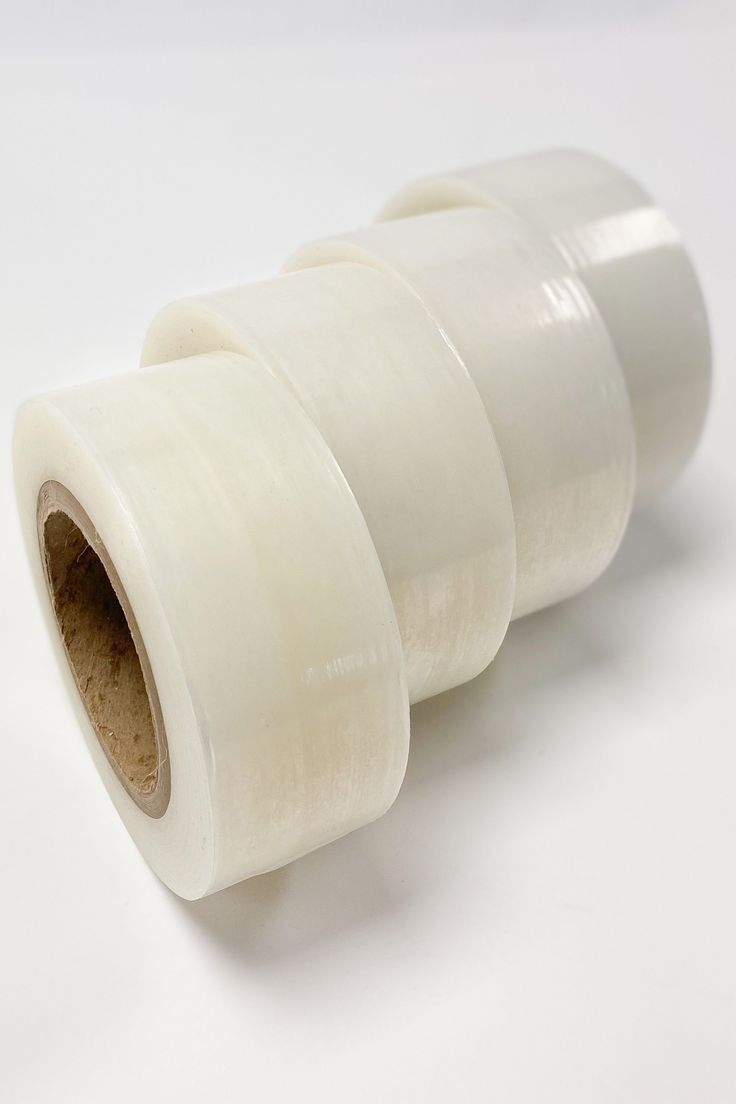
Compared with platinum-cured silicone PSA systems, peroxide-cured systems are more widely used in PI tape, PET high-temperature tape, glass cloth tape, mica tapes, pressure sensitive tapes, PSA tapes, protective films, and industrial masking tapes. These applications often require high temperature resistance, clean removal, stable peel adhesion, and good resistance to harsh processing conditions.
Compared with acrylic adhesive, acrylic PSAs, natural rubber, and rubber adhesives, silicone pressure sensitive adhesives are engineered for a wider temperature range and more demanding environments. Acrylic PSAs typically perform well from about -40°F to 250°F and may take up to 72 hours to reach maximum strength. Rubber PSAs are often the most affordable type of pressure sensitive adhesive and provide strong initial tack, but they are usually less resistant to heat, UV exposure, oxidation, and chemical attack.
Silicone PSAs are different. Depending on the formulation, chemistry, coating structure, and application design, silicone PSAs can withstand temperatures from about -100°F to 500°F, or approximately -70°C to 270°C, with some grades designed to approach 300°C under specific conditions. This makes them suitable for extreme temperatures, from low temperatures to high heat in electronics, automotive, aerospace, and industrial manufacturing.
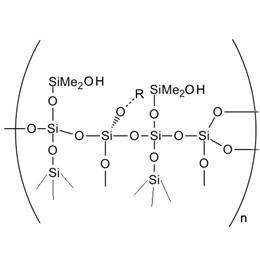
Silicone PSAs are usually formulated from silicone polymers and silanol-functional MQ resin. This chemistry gives them excellent chemical resistance, UV resistance, weather resistance, dielectric properties, and adhesion to difficult-to-bond surfaces. They also bond well to low surface energy materials and low surface energy substrates, including silicone, PTFE, polypropylene, and other specialized materials.
Key advantages of silicone PSA include:
-
Stable adhesive properties across a wide temperature range;
-
Good compatibility with PI, PET, PTFE, polypropylene, glass, metal, foam, mica, and many substrates;
-
Reliable bonding to low surface energy surfaces;
-
Excellent chemical exposure resistance and UV resistance;
-
Natural dielectric characteristics for electrical insulation;
-
Repositionable and clean removal properties in suitable formulations;
-
A useful balance of tack, peel adhesion, cohesive strength, and long-term stability.
However, silicone PSAs often have relatively low tack compared with rubber adhesives. They may not be ideal for applications that require immediate bonding at full strength after only light pressure. In many applications, final adhesion depends on well time, surface condition, coating thickness, curing degree, and process design.
Main Applications of Peroxide-Cured Silicone Pressure Sensitive Adhesive
PI Polyimide Tape / Kapton Tape
PI film offers excellent high temperature resistance, dimensional stability, and electrical insulation performance. It is widely used in PCB assembly, gold finger protection, electronic masking, battery insulation, and high-temperature industrial processes.
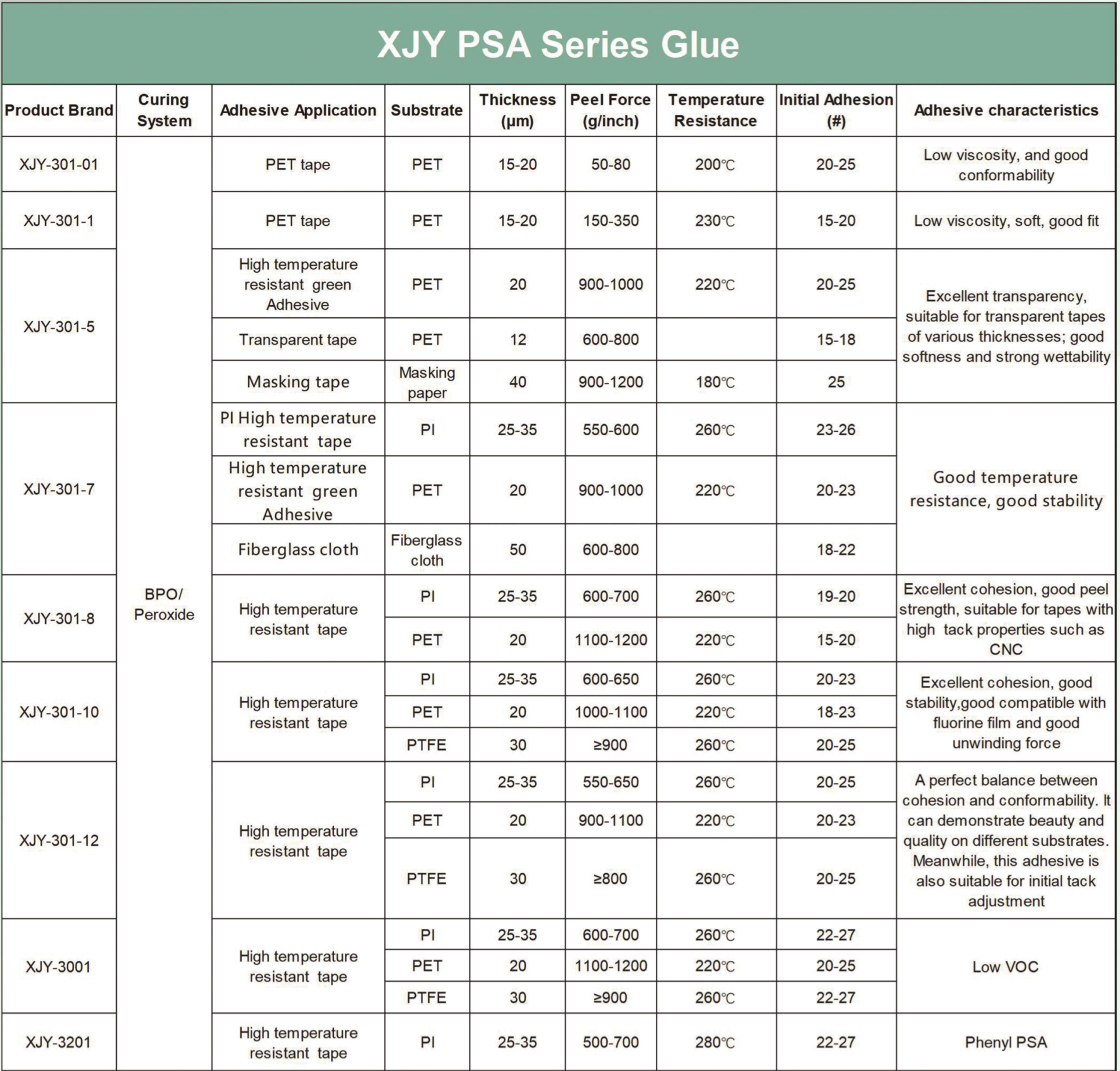
Silicone PSA for PI tape must provide stable peel performance, good residue resistance, and reliable adhesive strength after exposure to heat. In practical coating, peel adhesion on PI film is usually lower than on PET film. Therefore, adhesive selection should not rely only on one peel strength number. Substrate type, dry adhesive thickness, BPO dosage, primer, oven equipment, and line speed all need to be evaluated together.
PET High-Temperature Green Tape
PET high-temperature green tape is widely used in powder coating, industrial painting, electronics protection, temporary fixing, and manufacturing processes. Compared with PI, PET has a lower heat resistance limit, so the adhesive formulation must balance high temperature resistance, tack, peel adhesion, and substrate shrinkage risk.
For PET tapes and protective films, the oven temperature profile should be carefully controlled. Excessive heat may deform the PET film, while insufficient curing may cause residue, weak anchorage, or poor bonding stability.
Glass Cloth Tape and High-Cohesion Tape
Glass cloth tape is used in applications that require stronger mechanical properties, high-temperature holding power, vibration resistance, corrosion-related protection, and long-term industrial durability. These tapes are often exposed to heat, chemicals, and demanding assembly environments.
For high peel adhesion requirements, manufacturers may choose high-cohesion silicone PSA grades or adjust formulations through soft and hard adhesive combinations. This helps achieve a better balance between tack, cohesive strength, and final bond strength.
PTFE, Silicone, and Low Surface Energy Materials
PTFE, silicone rubber, polypropylene, and other low surface energy materials are difficult for many acrylic or rubber adhesives to adhere to. Silicone pressure sensitive adhesives naturally perform better on low surface energy substrates, making them suitable for specialty tapes, release-related surfaces, insulation materials, and industrial composite bonding.
A suitable primer can improve anchorage between the adhesive layer and the substrate. This is especially important when the tape is exposed to high temperature, chemicals, moisture, or mechanical stress.
Medical, Electronics, Automotive, and Outdoor Pressure Sensitive Tape Applications
Beyond industrial tapes, silicone PSAs are used in many applications across the medical, electronics, automotive, aerospace, and outdoor industries.
In medical applications, suitable medical-grade silicone PSAs are used in transdermal patches, wearable medical devices, wound care products, and medical tapes. Properly formulated and tested silicone PSAs can support skin-contact applications, breathable constructions, repositionable removal, and drug delivery systems where drug permeability and skin compatibility are important.
In electronics, silicone PSAs are commonly used for PCB assembly, high-temperature masking, displays, sensitive components, and electrical insulation. Because silicone is naturally dielectric and resistant to heat, chemicals, and UV exposure, it can help protect electronic parts in demanding environments.
In automotive and aerospace applications, silicone PSAs are selected for bonding insulation, outdoor wraps, aerospace components, and parts exposed to extreme cold, high heat, moisture, sunlight, and chemical environments. Their environmental durability helps the adhesive maintain integrity and resist degradation over long-term use.
Key Control Points in BPO Curing
BPO Dissolution and Moisture Control
Solid BPO usually needs to be dissolved in a solvent such as toluene before being added to the silicone PSA. Since industrial BPO may contain moisture, the solution should be allowed to stand and separate before use, so that water can be removed from the bottom layer.
If water enters the adhesive system, it may affect curing, adhesion, and bonding performance. Common problems include stringing, delamination, lower heat resistance, unstable peel strength, and poor anchorage.
Adhesive Dilution and Solid Content Adjustment
The dilution ratio of silicone PSA should be adjusted according to the target dry adhesive thickness. It should not be treated as a fixed number.
For dry adhesive thickness below 20μm, lower solid content can help achieve uniform coating. For 20μm to 30μm coatings, medium solid content helps balance leveling and film formation. For 30μm to 50μm coatings, higher solid content is usually needed so the adhesive layer can build properly.
Mixing time and equipment also matter. Insufficient mixing may cause poor uniformity, while excessive mixing or high-speed stirring may generate localized heat. This can cause premature crosslinking, gel formation, particles, or coating defects.
Primer and Substrate Anchoring
For substrates such as PI, PET, PTFE, polypropylene, glass, and metal, primer has a strong influence on anchoring between the adhesive and the substrate. If the primer absorbs moisture, loses activity, or is not properly cured, the tape may suffer from adhesive transfer, delamination, weak bond strength, or reduced heat resistance.
A sound primer process can improve anchorage and help the adhesive maintain stable properties when exposed to high temperature, chemicals, moisture, sunlight, or outdoor conditions.
Oven Temperature and Line Speed Matching
Peroxide-cured silicone PSA usually requires a staged oven temperature profile. The front zone should allow mild solvent evaporation to avoid fast surface skinning. The middle zone continues solvent removal and starts crosslinking. The rear zone completes deeper curing and network formation.
If line speed is too fast, solvent may not evaporate completely. This may cause strong odor, soft adhesive, residue, low peel adhesion, and reduced high-temperature resistance. If the temperature rises too quickly, bubbles, coating marks, substrate shrinkage, and poor adhesive appearance may occur.
How Solvent Selection Affects PSA Tapes Quality
Silicone pressure sensitive adhesives are commonly diluted with toluene, xylene, or other non-polar solvents. Different solvents evaporate at different speeds, which directly affects coating appearance, production efficiency, and final tape performance.
Low-boiling solvents evaporate quickly and may cause bubbles or coating marks if the front oven temperature is too high. High-boiling solvents evaporate more slowly. If the oven temperature is insufficient or the line speed is too fast, solvent may remain in the adhesive layer, causing odor, softening, delamination, and reduced chemical resistance.
Therefore, when customers change the solvent system, they should also adjust coating thickness, oven temperatures, line speed, and curing conditions. For peroxide-cured silicone PSA tapes, stable production depends not only on adhesive formulation, but also on the complete coating process.


1.jpg)