In the rapidly evolving advanced materials sector, industrial applications are constantly pushing the physical and chemical limits of substrate protection. Traditional organic resins often exhibit limitations—such as poor weather resistance, chalking, and thermal degradation—when exposed to extreme environments.
As a high-tier organic-inorganic hybrid material, methyl phenyl silicone resin perfectly marries the extreme thermal stability of an inorganic silicon-oxygen backbone with the flexible adjustability of organic groups. Over the past decade, it has become an indispensable core material in aerospace, automotive, electronics, and construction. This article provides formulation engineers and B2B procurement decision-makers with a comprehensive analysis of its molecular structure, core technical advantages, cross-industry applications, and market insights.
-
What is Methyl Phenyl Silicone Resin, and how is it synthesized?
-
Technical Advantages: Breaking Through Performance Bottlenecks
- Compatibility, Formulations, and Storage
-
Cross-Industry Application Fields
- Market Insights and Future Outlook
1. What is Methyl Phenyl Silicone Resin, and how is it synthesized?
Methyl phenyl silicone resin is a high-performance organosilicon polymer with methyl and phenyl groups on a siloxane backbone. It is characterized by a silicon–oxygen (Si–O–Si) backbone, with methyl and phenyl groups attached to the silicon atoms. This unique molecular design achieves a perfect combination of rigidity and flexibility.
To manufacture this advanced polymer, several synthesis and preparation methods are employed:
Methyl phenyl silicone resin is synthesized from methyltrichlorosilane and phenyltrichlorosilane through hydrolysis and condensation reactions, producing a three-dimensional crosslinked structure.
The preparation method of methyl phenyl silicone resin involves mixing octadecyloxy phenyl TMOS, methyl alkoxy silane, a basic catalyst, and an organic solvent, followed by the addition of water and refluxing.
The synthesis of methyl phenyl silicone resin can be performed under acidic conditions using tetraethoxysilane, hexamethyldisiloxane, and tetramethyl-phenylbenzene silyl oxide as main raw materials.
The preparation of methyl phenyl silicone resin can include a vacuum drying step at temperatures between 150-240 °C under a vacuum of -0.08 to -0.096 MPa.
The ratio of phenyl to methyl groups in methyl phenyl silicone resin can be adjusted to achieve different properties, such as hardness and low-temperature flexibility.
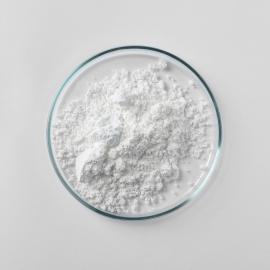
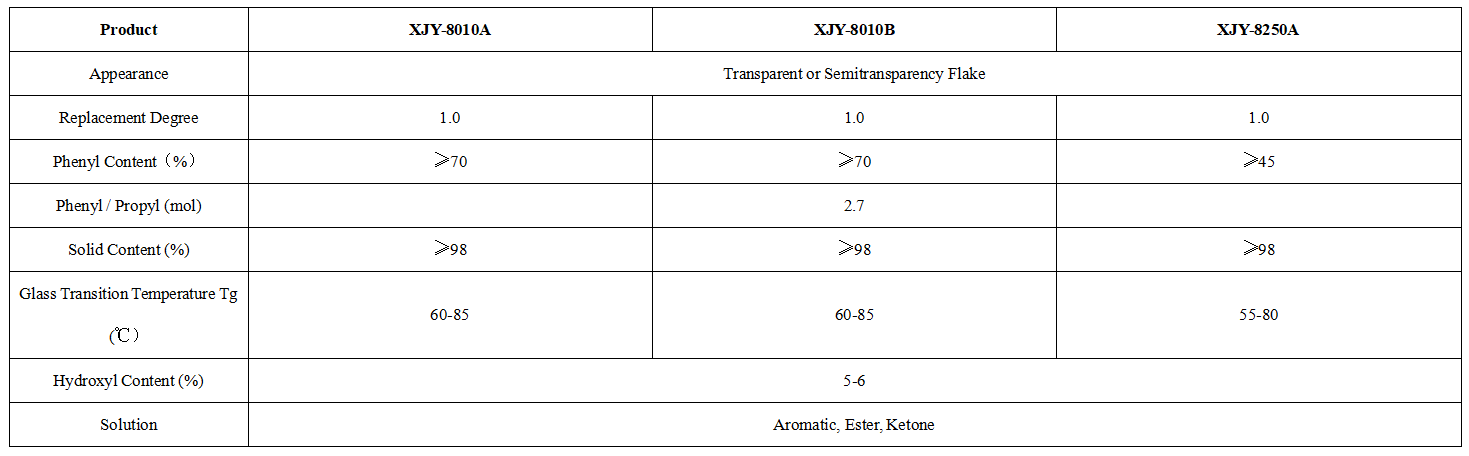
XJY-8010A/B/8250A Methyl Phenyl Silicone Resin
Methyl phenyl silicone resin can be used in high-temperature-resistant powder coatings and liquid coatings. The main feature of silicone resin is its excellent heat resistance, which hardly decomposes at 200℃ or even higher temperatures, and can be used to prepare all kinds of heat-resistant coatings, with heat-resistant insulation grade up to H class. Silicone resins have excellent weathering and UV resistance and can be used for powder and liquid coatings. Silicone resins have excellent weather resistance and provide all-around protection for equipment. Silicone resins have excellent weatherability and good adhesion. Silicone thin layers also have excellent weather resistance, ozone resistance, arc resistance, hydrophobic moisture resistance, salt spray resistance, mold resistance, and other properties.
We can also be equivalent to the major market player. If you have this need, please contact us.
2. Technical Advantages: Breaking Through Performance Bottlenecks
For formulation engineers seeking to upgrade product competitiveness, phenyl silicone resin is not just an additive; it is a "performance amplifier" that breaks through the ceiling of existing formulations.
2.1 Extreme High Heat Resistance and Anti-Cracking
It offers excellent heat resistance, UV durability, and electrical insulation. Methyl phenyl silicone resin maintains structural integrity at temperatures from –50 °C to 300 °C, with short-term resistance up to 500 °C. This is a level of heat resistance not commonly found in other organic resins. In fact, methyl phenyl silicone resin offers higher heat resistance compared to other silicone resins. It also provides excellent crack resistance during severe thermal cycling.
2.2 Outstanding Oxidative and Weathering Resistance
The phenyl groups in methyl phenyl silicone resin enhance oxidative resistance by forming a dense silica barrier layer, which isolates oxygen and allows the material to remain stable and resist degradation even during weathering or salt spray exposure. Methyl phenyl silicone resin is known for its excellent weathering and UV resistance, making it suitable for outdoor applications.
2.3 Top-Tier Electrical Insulation Properties
Methyl phenyl silicone resin has excellent electrical insulation performance with a volume resistivity above 10¹⁵ Ω·cm. It is suitable for high-voltage insulation due to its dielectric loss tangent below 0.001 and arc resistance greater than 20 kV/mm.
2.4 Chemical Resistance and Water Repellency
The resin's surface remains hydrophobic, ensuring water resistance and minimizing moisture absorption under high temperatures or humid environments. Methyl phenyl silicone resin has superior chemical resistance, allowing it to withstand acids, alkalis, and most solvents, which is a significant advantage over other silicone resins. The presence of methyl groups significantly enhances its water repellency.
3. Compatibility, Formulations, and Storage
Methyl phenyl resins exhibit good compatibility with other polymers and other resins. They can be effectively mixed with epoxy, polycarbonate, and acrylics to boost flame retardancy and physical performance.
In addition to curing formulations, the resin can be combined with a silicon hydride crosslinker and a platinum catalyst to significantly improve mechanical properties and achieve high mechanical strength. Certain grades contain reactive hydroxyl groups to ensure excellent adhesion to substrates.
To maintain its integrity and ensure a long shelf life, the material should be stored in a cool, dry, and well-ventilated place. The polymer exhibits low volatility, making it safe for advanced processing.
4. Cross-Industry Application Fields
Leveraging the above advantages, methyl phenyl polysiloxane plays a critical role in multiple high-value-added industries:
High Temperature Resistant Coatings: It is a primary binder for heat-resistant coatings, particularly for industrial equipment like exhaust pipes and jet engines. It is used as a binder in heat-resistant coatings for exhaust pipes, chimneys, stoves, ovens, boilers, and heat exchangers. Methyl phenyl silicone resin is preferred for high-temperature-resistant coatings and heat-resistant paints used in aerospace engines, industrial chimneys, and automotive exhaust pipes due to its ability to form a dense, adherent film with a highly durable gloss appearance.
Electrical and Electronic Insulation: Methyl phenyl silicone resin provides excellent electrical insulation performance, making it suitable for transformer insulation coatings and semiconductor encapsulation. It is ideal for electrical insulation coatings and electronic encapsulants.
Adhesives and Construction: Methyl phenyl silicone resin is utilized in construction for architectural waterproof coatings and protective films for metals and glass. It is widely used in adhesives and protective layers, often formulated as a solution in solvents like xylene or toluene, though solvent-free options are gaining traction.
5. Market Insights and Future Outlook
The need for high-temperature and weather-resistant resins is expected to grow as industries focus on energy saving and environmental protection. Methyl phenyl silicone resin is becoming increasingly important in applications such as electric vehicle electronics and solar panel encapsulation. Emerging trends in the methyl phenyl silicone resin market include solvent-free formulations and low-VOC additions.
The key to improving product competitiveness lies in choosing reliable foundational materials. As a leading manufacturer with over 30 years of R&D expertise, XJY Silicones is committed to providing global clients with professional technical support and diversified, customized solutions for high-performance coatings. Reach out today to discover how our specialized phenyl silicone materials can elevate your next project.
XJY Silicones is one of the leading silicone MQ resin and VMQ silicone manufacturers in China, with more than 30 years of R&D and manufacturing experience in the silicone industry, as well as more than 15 related patents and technical support. Our silicone raw material products can meet the needs of the medical silicone coating field and support the provision of diversified customized solutions.